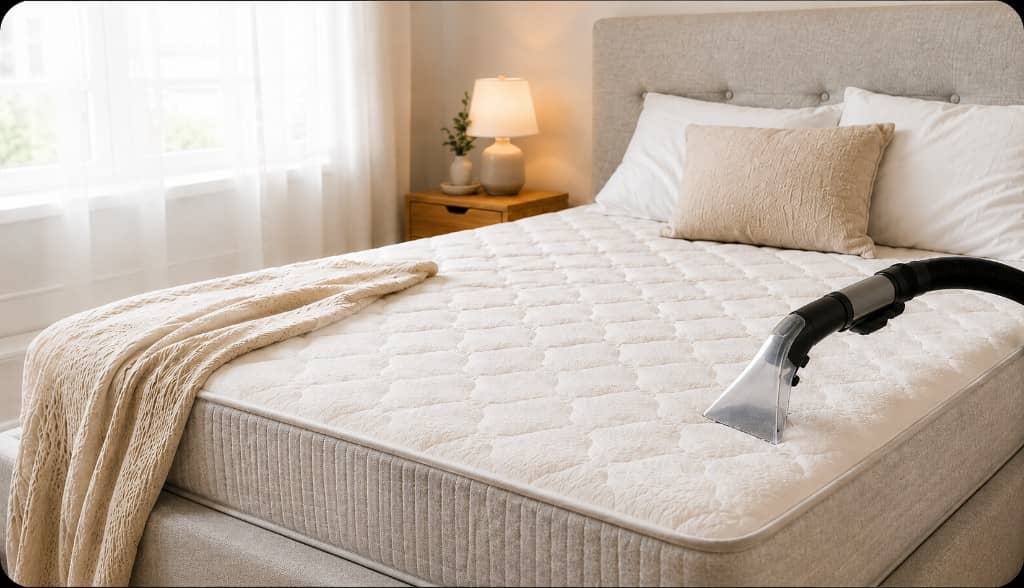

Clean sheets are not enough
Clean sheets do not automatically mean a clean mattress. What can build up in a child's bed, and how often should parents actually clean it?
Young children spend a surprisingly large amount of time in bed.
Babies and infants may sleep for many hours, while toddlers also use their beds for reading, resting and playing.
Yet the mattress itself is one of the easiest things to forget during routine household cleaning.
We wash the sheets. The mattress stays underneath.
So how often should it actually be cleaned?
There is no single schedule that works for every family.
The right approach depends on your child's age, how much time they spend in bed, pets, sweating, allergies, spills and other factors.
There are, however, clear recommendations for regular bedding care and controlling household dust and dust mites.
Why a child's bed is different from an adult's bed
A child's bed takes on a surprising amount of everyday load. Beyond sleep, it may involve:
- food and drinks
- sweating
- saliva
- small accidents
- nighttime wetting
- pets
- toys
- ordinary household dust
With babies, contact with the mattress is even more frequent because they spend so many hours in a cot or bed.
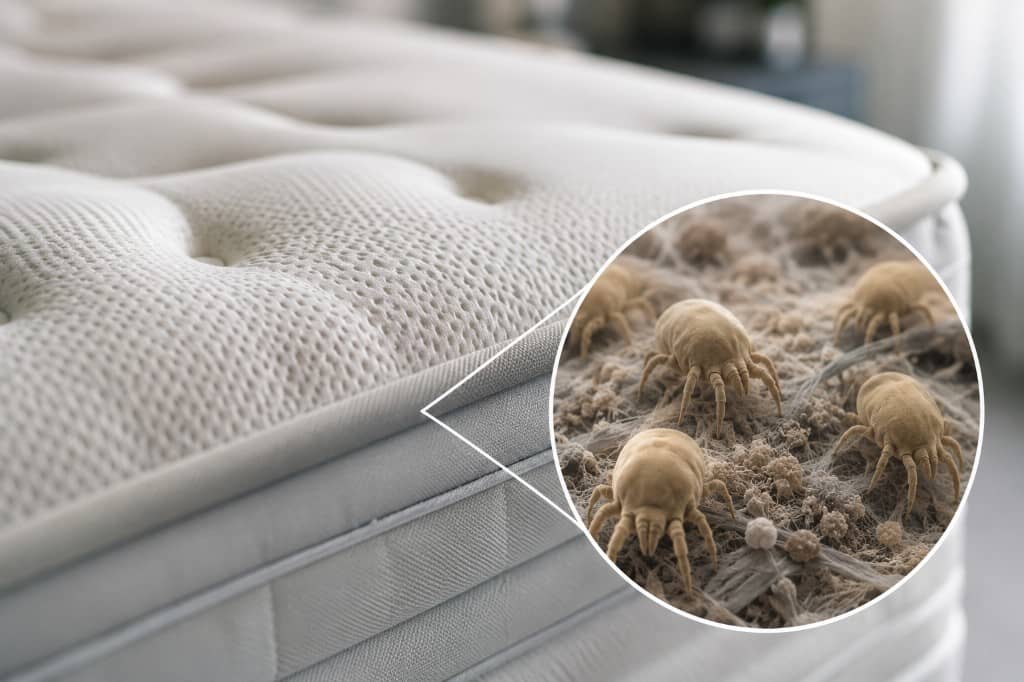
There is also heat and moisture — a warm, humid environment supports dust mites. AAAAI notes that dust mites are commonly found in bedding, mattresses, upholstered furniture and carpets. More: dust mites in mattress and allergens at home.
What can build up inside a child's mattress?
This does not mean every mattress is “dirty”. It is a gradual process of use.
Over time it can be exposed to:
- Sweat and moisture — children sweat during sleep; long hours in bed increase contact with the mattress
- Skin particles — naturally become part of household dust and textiles
- Dust — fine particles can settle through bedding and around the mattress
- Dust mites and their allergens — common in dust and textiles; can trigger allergy and asthma symptoms in sensitive people
- Stains and organic soiling — milk, urine, vomit, saliva, food or drinks
With stains and accidents, acting quickly matters.
How often should you wash children's bedding?

Once a week is a good basic starting point.
AAAAI recommends weekly washing of bedding for people who are sensitive to dust mites, while CDC also recommends washing bedding weekly and drying it thoroughly.
With a young child, you may need to wash it more often. For example, if your child:
- sweats heavily at night
- is ill
- has reflux
- eats in bed
- frequently wets the bed
- or sleeps with a pet
More frequent changes are perfectly reasonable.
And when bedding becomes visibly soiled? Do not wait for laundry day.
What about the mattress itself?
The mattress does not need to be washed every week. Regular maintenance matters much more.
It is worth:
- removing dust regularly
- ventilating the bedroom
- using a suitable protective cover
- dealing with stains quickly
- keeping the mattress dry
CDC specifically recommends keeping mattresses dry and replacing damaged protective covers. On humidity: humidity in the apartment. Practical guide: mattress cleaning guide.
An interesting fact: mattresses can be an important source of dust-mite allergens
Research in children shows that mattress-focused measures can influence allergen levels.
A study involving 810 children from families with allergic backgrounds looked at mite-impermeable mattress covers. After 12 months, mattresses with active protective covers had approximately half the amount of a major dust-mite allergen compared with the control group.
But this does not mean that mattress covers automatically prevent allergies.
A large European randomized study involving 696 newborns at high risk of allergy did not find a significant difference in dust-mite sensitization or allergic disease by 24 months between children using mite-impermeable mattress covers and the control group.
The more accurate takeaway: reducing allergens in the sleeping environment is useful, but it is not a guarantee against developing an allergy.
What if your child is allergic to dust mites?

In that situation, bedroom hygiene deserves extra attention.
AAAAI recommends:
- washing bedding weekly
- using allergen-proof mattress and pillow covers
- regular vacuuming
- keeping indoor humidity around 30–50%
- reducing unnecessary dust-collecting surfaces where possible
CDC similarly recommends weekly bedding washing, thorough drying, protective covers and regular vacuuming for dust-mite exposure and asthma management.
Does daily mattress vacuuming help?
There is a study that focused specifically on children.
Researchers followed 40 children aged 6–12 with persistent allergic rhinitis and sensitization to dust mites. One group vacuumed their mattresses every day for two weeks.
After the two-week period, the intervention group showed a significant reduction in dust levels and improvements in several allergy symptoms.
That does not mean every child needs a daily mattress-vacuuming routine. It was a small, short-term study involving a specific group of children with allergies.
For most families, consistent maintenance and responding to actual dirt are more practical.
What should you do if your child wets the bed?
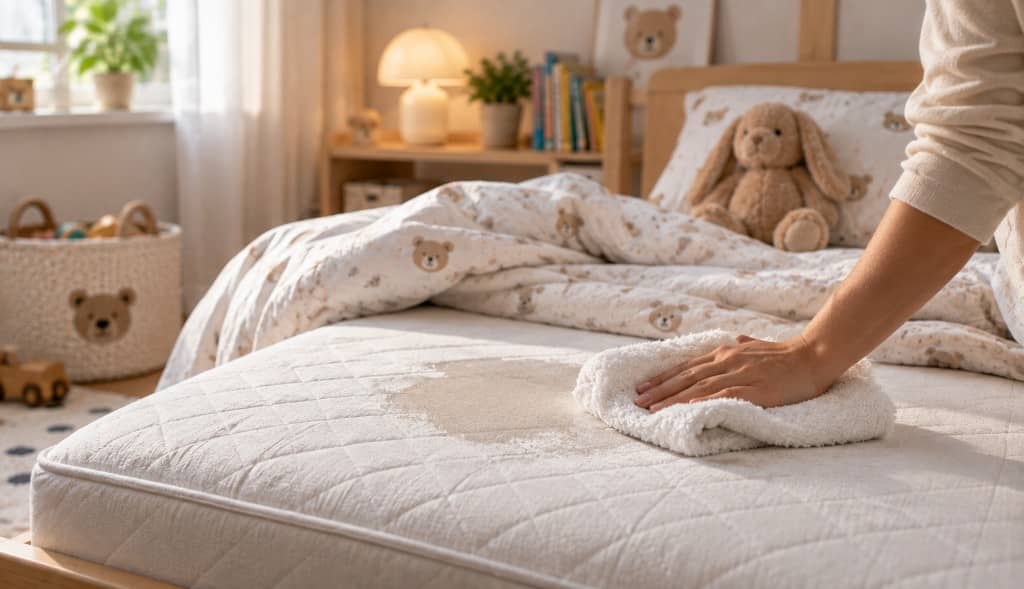
This is one of the most common situations parents face.
The basic rule is simple: the sooner you remove the moisture, the better.
When a mattress gets wet:
- remove the source of moisture as quickly as possible
- blot the liquid rather than rubbing it deeper into the fabric
- follow the mattress manufacturer's care instructions
- allow the mattress to dry completely
CDC recommends keeping mattresses dry.
A protective mattress cover can make a huge difference. It creates an extra barrier and makes nighttime accidents much easier to manage — but it does not replace care of the mattress itself.
So how often should you clean the mattress itself?
Be cautious with a universal “every 3 months”. There is no single right number for every mattress.
A practical split looks like this:
- Every week — wash bedding; check the protector; vacuum around the bed; vacuum the mattress if appropriate for the material and manufacturer guidance
- After every soiling — remove liquid immediately; wash soiled textiles; dry the mattress thoroughly
- Ongoing — ventilate the bedroom; check humidity; monitor mattress condition
- Deeper cleaning — according to mattress type, use intensity and actual condition
That is more reasonable than telling every family they need professional cleaning exactly once every X months.
What about a baby's cot mattress?
For babies, hygiene recommendations can be stricter.
CDC guidance for childcare settings states that crib mattresses should be cleaned and disinfected weekly and whenever they become soiled or wet, while infant linens in those settings are cleaned daily.
These are recommendations for childcare environments, not a universal household standard.
Still, they highlight one useful principle: a wet or visibly soiled infant mattress should not simply be left until tomorrow.
What about soft toys in the bed?

Soft toys can collect dust just like other fabrics.
AAAAI recommends reducing dust-collecting items for children sensitive to dust mites and regularly washing washable toys.
You do not have to take away your child's favourite teddy bear. Just avoid filling the entire bed with dozens of dust-collecting textiles — and clean the toys that stay there regularly.
5 signs your child's mattress needs attention
Take a look at the mattress.
- Visible stains — milk, food, sweat, urine or other spills
- Persistent odour — fresh sheets cannot solve a smell coming from the mattress itself
- Discolouration — darkened or heavily worn areas
- Persistent moisture — a mattress should not remain wet or damp
- Years without deeper maintenance — daily use for years without thorough cleaning
The biggest parenting mistake? Cleaning only what you can see
Fresh sheets look great. The bed feels clean. But underneath the sheets, the same mattress remains.
That is why it helps to think of a child's bed as a whole system:
- bedding
- protective cover
- mattress
- bed base
- surrounding area
Each layer needs its own kind of care.
What does a child's bed really need?

You do not need to deep-clean the entire bedroom every week. A simple routine is much more realistic.
- Every week — wash bedding and other frequently used bed textiles
- Immediately after accidents — remove stains and moisture
- Regularly — vacuum, ventilate the room and check the mattress and protective cover
- When needed — consider deeper mattress cleaning when soiling has accumulated or accidents have happened repeatedly
When does professional mattress cleaning make sense?
Professional cleaning may be useful when:
- there are older stains
- there have been repeated accidents
- your child spends a lot of time on the mattress
- the mattress has gone a long time without thorough maintenance
- there is significant visible soiling
- regular household care is no longer enough
The material and the manufacturer's care instructions should always be taken into account.
Professional mattress cleaning is not simply about soaking the mattress with water. The method, moisture level and drying process all matter.
A clean child's bed does not need to be sterile
Perhaps the most important message for parents is this:
A child's bedroom does not need to be a sterile laboratory. You do not need to wash absolutely everything every day.
What matters is having a simple, consistent cleaning routine, dealing with accidents quickly and remembering the things hidden underneath the sheets.
Clean bedding is only the beginning. A well-maintained bed also includes the protective cover, mattress, textiles and the area surrounding the bed.
And when your mattress needs deeper care, Cleanárna can help.
We provide professional mattress, sofa, carpet and upholstery cleaning in Prague and the surrounding area, with the cleaning method adapted to the specific material and its condition.
Not sure whether your mattress can be professionally cleaned?
Send us a photo. We can recommend a suitable approach and give you an estimated price. Order.
A cleaner home. Calmer everyday life.
Sources & research
Dust mite facts in this article come from peer-reviewed studies and health organisations — not clickbait claims like “millions of mites in one mattress”.
- AAAAI — Indoor Allergens
- AAAAI — Managing Indoor Allergen Culprits
- CDC — Strategies for Addressing Asthma in Homes (checklist)
- CDC — How to Clean and Disinfect Early Care and Education Settings
- PubMed — PIAMA: mattress encasings and mite allergen levels (810 children)
- PubMed — SPACE: mite-impermeable encasings, 24-month results (696 newborns)
- PubMed — Effects of vacuuming mattresses on allergic rhinitis in children
Frequently asked questions
How often should you wash children's bedding?
Once a week is a solid baseline. AAAAI and CDC recommend weekly washing for dust-mite control. With a young child, change more often when needed — illness, heavy sweating, eating in bed, bedwetting or a pet in bed. After soiling, wash immediately.
How often should you clean the mattress itself?
It does not need washing every week. Focus on regular maintenance, keeping it dry, using a protector and reacting quickly to stains. Schedule deeper cleaning based on condition, not a fixed universal calendar.
What if a child wets the mattress?
Remove moisture as soon as possible, blot rather than rub, follow manufacturer guidance and dry the mattress thoroughly. A protector helps a lot but does not replace mattress care.
Do mite-proof covers prevent allergies?
They can reduce allergen levels in the mattress (one study of 810 children found about half the major allergen). A large European study of 696 newborns did not show prevention of sensitization at 24 months. Aim to reduce allergens — do not promise allergy prevention.
When should you choose professional mattress cleaning?
For older stains, repeated accidents, long periods without maintenance, heavy soiling, or when home care is no longer enough — always respecting the material and manufacturer instructions.
Ready for professional cleaning?
Calculate your price online — no obligation, instant estimate.
Get instant price