Why indoor allergens matter
Sneezing, a runny nose, itchy eyes, nasal congestion or coughing are not always signs of a cold. For some people, symptoms appear regularly at home, at night or while cleaning. The reason may be indoor allergens.
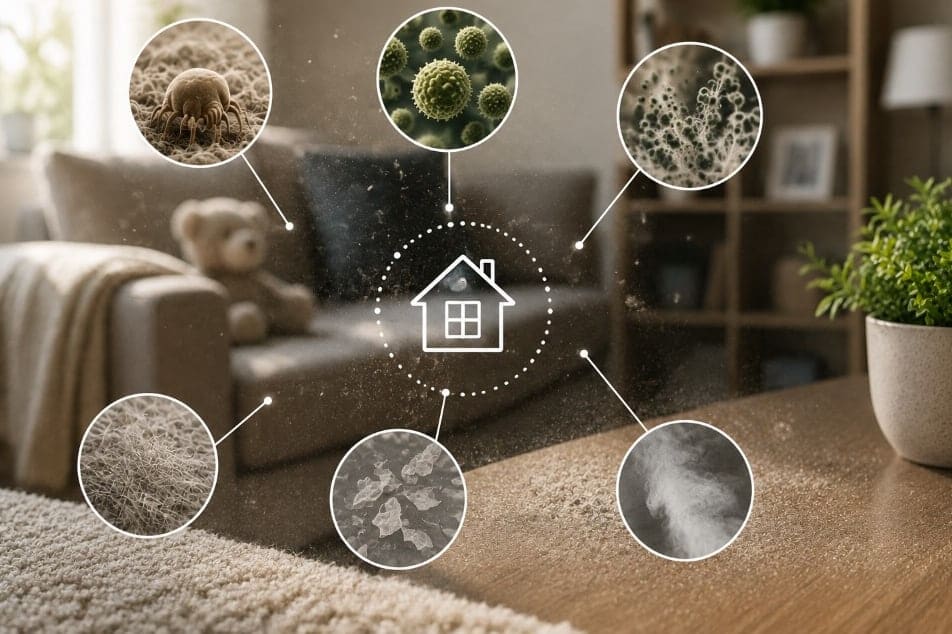
Allergens can be found in dust, mattresses, carpets, upholstered furniture, bedding and environments where pets live. Important indoor allergens include house dust mites, animal allergens, mould and cockroach allergens.
The good news is that exposure to some indoor allergens can be reduced through appropriate cleaning and everyday habits. The goal is not a “sterile home”, but less unnecessary exposure and a healthier everyday environment.
What are indoor allergens?
An allergen is a substance that the immune system of a sensitive person mistakenly identifies as a threat. In a sensitive person this can lead to an allergic reaction.
Common household allergen sources include house dust mites, pets, mould, cockroaches, and dust particles that can carry allergens. Certain chemicals and fragrances may act primarily as irritants rather than classic allergens — more in our article on professional cleaning chemicals.
AAAAI lists dust mites, animal allergens, mould and cockroach allergens among the important indoor allergens. That means a home that looks clean is not necessarily an allergen-free home.
1. House dust mites: one of the most common issues
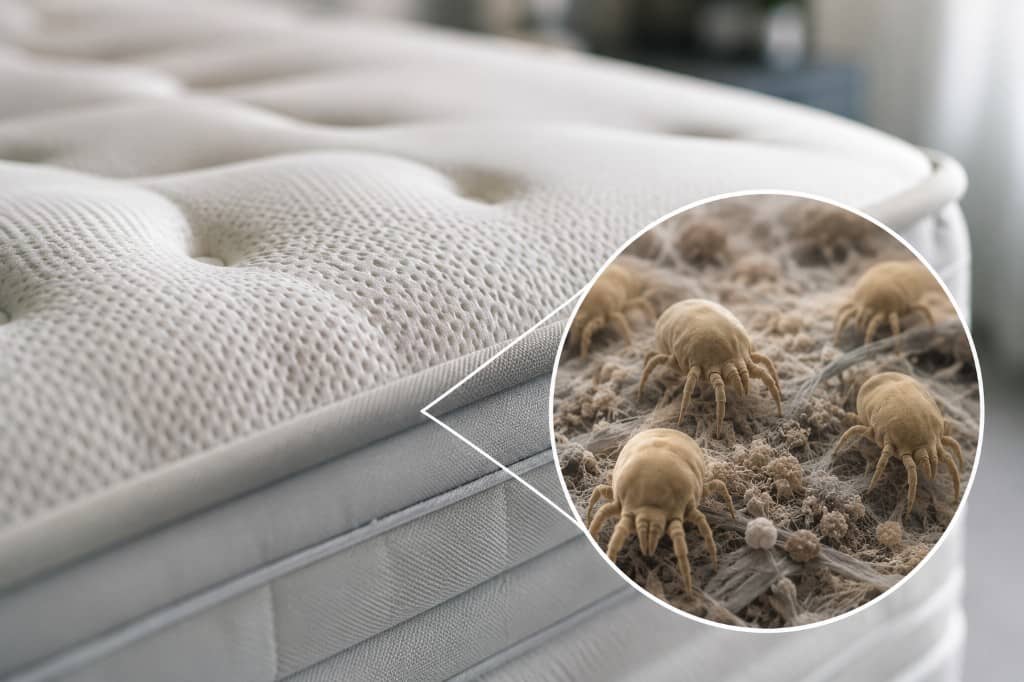
Dust mites are microscopic arthropods that cannot be seen with the naked eye. They thrive in warm, humid environments and are commonly found in mattresses, bedding, carpets and upholstered furniture.
For allergy sufferers, the main problem is not the mites themselves but allergens originating primarily from their faeces and body parts. They can contribute to sneezing, a runny nose, nasal congestion, an itchy nose and throat, watery eyes, coughing and worsening asthma symptoms.
Symptoms can become worse during sleep or cleaning, when allergens can become airborne. We cover this in more detail in dust mites in the mattress.
- Warmth + humidity + textiles + dust + shed skin cells.
- The bedroom is one of the most important rooms to focus on when reducing allergens.
- Mites thrive in mattresses, bedding, carpets and upholstery.
2. Mattresses and pillows: why they matter
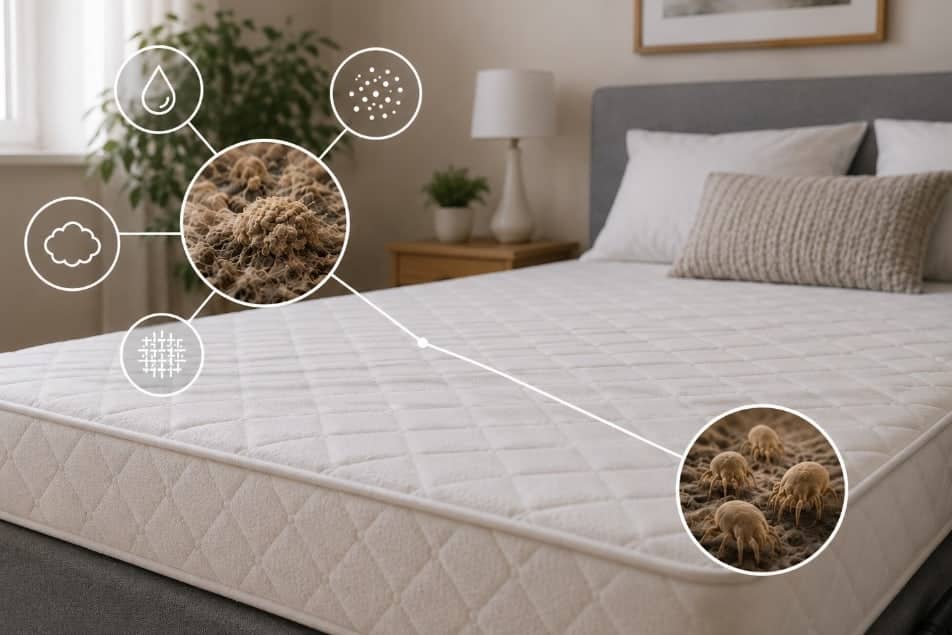
We use a mattress for several hours every day. During sleep, moisture, sweat, skin particles and other organic residues can accumulate in it. This makes the mattress a potential reservoir for dust and dust-mite allergens.
WHO identifies dust mites as important indoor allergens found, among other places, in bedding, carpets and upholstered furniture.
Clean bedding alone does not mean the mattress inside is clean. How to maintain it is in our mattress cleaning guide.
- Wash bedding regularly.
- Use a protective mattress cover.
- Vacuum the mattress.
- Control bedroom humidity and ventilate regularly.
- When needed, look after the mattress itself, not only the sheets.
3. Carpets: a dust trap in the home
Carpets can make a home comfortable, but they can also accumulate dust and particles that may become airborne again through walking or cleaning.
WHO lists carpets among the places where indoor allergens linked to dust mites can be present. That does not mean every carpet automatically causes allergies. For sensitive people, though, it makes sense to pay attention to how much dust and allergens build up in textiles over time.
Vacuum regularly, ventilate, deal with stains and moisture, and deep-clean the carpet when needed. Effective vacuum filtration also matters, especially if someone in the household has allergies.
4. Upholstered furniture: sofas, armchairs and upholstered chairs
We often spend several hours a day on the sofa — sitting, resting, eating; sometimes children or pets sleep there too.
Upholstery gradually collects dust, skin particles, pet hair, crumbs, pollen, particles brought in from outdoors and pet allergens. WHO also identifies upholstered furniture as one of the places where dust-mite allergens can be present.
Wiping the coffee table or vacuuming the floor is not enough. Textile surfaces need their own maintenance — from regular vacuuming to deep sofa cleaning.
5. Pets: it is not just about fur
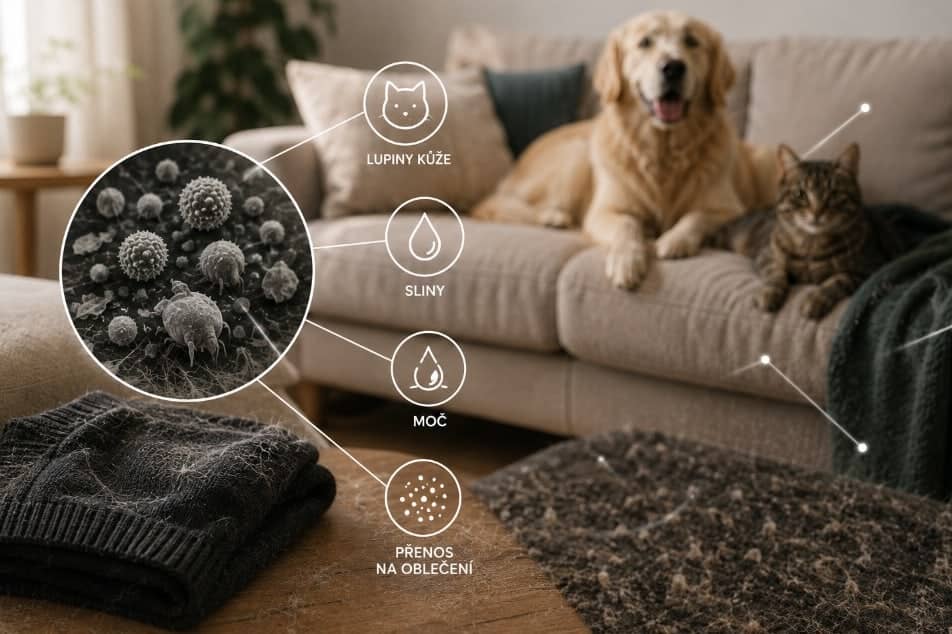
A common misconception is: “I am allergic to cat hair.” In reality, cat and dog allergens are not simply the hair itself. They can be found in skin flakes, saliva and urine, among other sources.
You can keep the home tidy and vacuum hair regularly and still have an allergen problem. These allergens can accumulate in sofas, carpets, mattresses, beds, curtains, clothing and other textiles.
AAAAI also notes that animal allergens can be transported on clothing and then reach rooms where the animal itself is not present. How to deal with odours and residues in textiles is in pet odour removal.
6. Mould: a problem you must not only “wipe away”
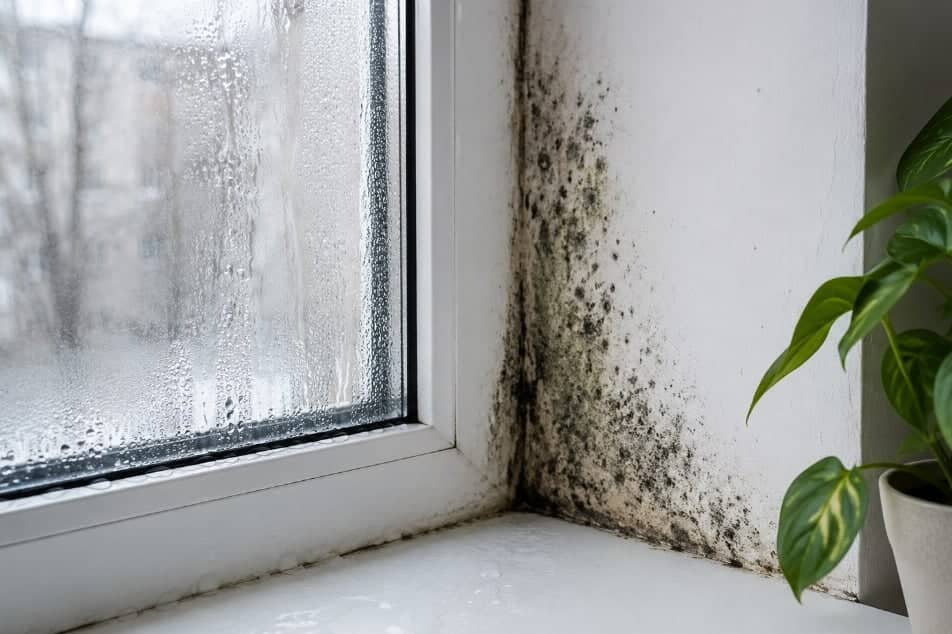
Mould is another important source of biological particles indoors. WHO associates persistent dampness and indoor mould growth with increased prevalence of respiratory symptoms, allergies and asthma.
Mould can appear around windows, in corners, behind furniture, in bathrooms, on walls affected by thermal bridges, or anywhere with persistent moisture.
If the cause remains — humidity, condensation or poor ventilation — the problem can return. With mould, the key is to address the source of moisture. Practical steps are in humidity in the apartment.
7. Why can allergies become worse at night?
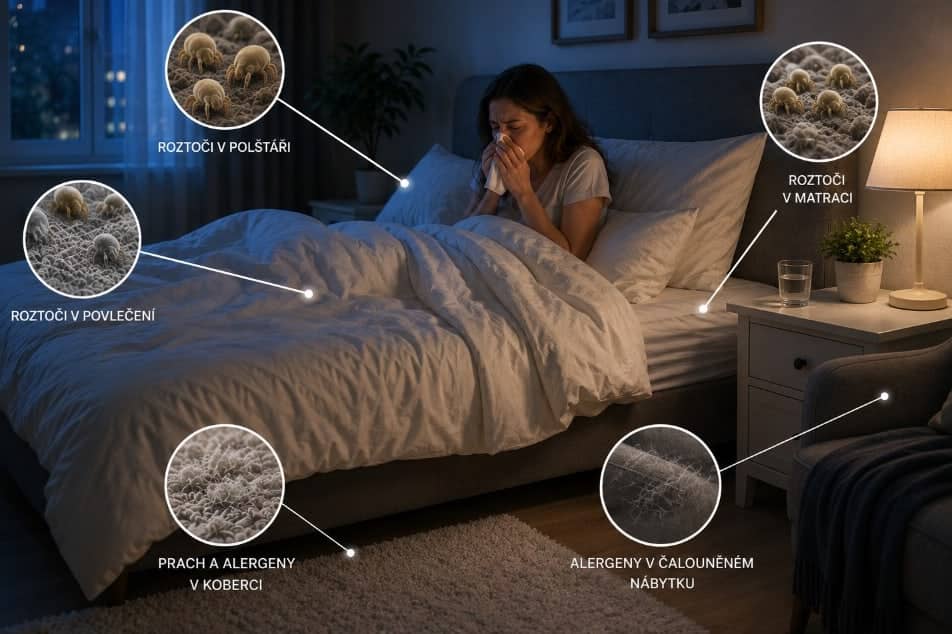
If someone feels better outside the home but their symptoms regularly become worse in the evening or at night, the bedroom environment may be worth considering.
The bedroom contains several potential allergen reservoirs at once: mattress, pillow, bedding, carpet and upholstered furniture. With dust-mite allergy, symptoms are often worse during sleep because a person spends a long time right next to the mattress and bedding.
If sneezing, congestion, coughing or wheezing keep recurring, it is not wise to assume it is “just dust”. A doctor or allergist can determine the cause of an allergy and, if needed, arrange allergy tests.
How can you reduce allergens at home?
There is no single method that removes every allergen. A combination of measures is more useful.
| Area | What helps |
|---|---|
| Bedroom | washing bedding, protective covers, vacuuming the mattress, humidity, ventilation |
| Sofa and upholstery | vacuuming textiles, removing pet hair, not leaving stains and moisture in the fabric, deep cleaning |
| Floors and carpets | regular vacuuming including edges, not leaving carpets damp, extraction when needed |
| Humidity | ventilate and address moisture sources, not only the mould that follows |
Can professional cleaning remove allergens?
Professional cleaning is not a treatment for allergies and cannot guarantee complete removal of all allergens.
However, it can be part of maintaining textile surfaces by helping remove accumulated dirt, dust and other particles from carpets, sofas and mattresses.
It is important to see cleaning as part of a wider system: washing, vacuuming, ventilation, humidity control, protective covers and regular textile care. That is where professional extraction cleaning of a sofa, carpet or mattress can make sense.
How often should you clean a sofa, carpet or mattress?
There is no universal interval for every household. Frequency depends on the number of people, children, pets, intensity of use, allergies, dust levels, humidity, smoking and material type.
If someone in the home has allergies, you have pets, or you have a lot of textiles, it may be worth giving their maintenance more attention. A clean home is not a sterile home. The goal is to reasonably reduce dust, moisture and potential allergens.
When is everyday cleaning no longer enough?
Take notice if visible dust builds up on textiles, the sofa or mattress smells, there are old stains, pets live in the home, you have a lot of carpets, moisture keeps returning, you suspect mould, or allergy symptoms regularly get worse at home.
For health problems, though, it is important to address the cause with a doctor first. Cleaning the home does not replace diagnosis or treatment of an allergy.
Professional textile cleaning in Prague
We often focus most of our cleaning efforts on floors, kitchens and bathrooms. Yet we spend many hours every day in contact with mattresses, sofas, carpets, pillows and bedding. Textiles can accumulate dust and other particles.
Cleanárna provides sofa cleaning, carpet cleaning and mattress cleaning in Prague and the surrounding area. Professional extraction cleaning can complement regular household maintenance, particularly for textiles used every day.
The goal is not to promise an “allergen-free home”, but to provide regular care for surfaces where dust, dirt and other particles can accumulate.
Sources & research
Dust mite facts in this article come from peer-reviewed studies and health organisations — not clickbait claims like “millions of mites in one mattress”.
Frequently asked questions
What are the most common indoor allergens?
Important indoor allergens include house dust mites, pet allergens, mould and cockroach allergens.
Can dust cause allergies?
Dust itself is not one single allergen. However, dust can contain or carry different allergens, including particles originating from dust mites, animals and mould.
Where are dust mites commonly found?
Dust mites thrive in warm, humid environments and are commonly found in mattresses, bedding, carpets and upholstered furniture.
How do I know if I have a dust-mite allergy?
Symptoms can include sneezing, runny nose, nasal congestion, itchy or watery eyes, coughing or worsening asthma. Symptoms may become more noticeable during sleep or cleaning. A healthcare professional should make the diagnosis.
Can sofa cleaning help with allergens?
Deep cleaning can help remove accumulated dirt and particles from textile surfaces. However, it cannot guarantee complete removal of every allergen or cure an allergy.
Is mould in a home dangerous?
Persistent dampness and mould growth are associated with increased respiratory symptoms, allergies and asthma. Addressing the source of moisture is therefore important.
Ready for professional cleaning?
Calculate your price online — no obligation, instant estimate.
Get instant price