Why indoor humidity matters
Most people notice indoor humidity only when windows fog up, a musty smell appears, or dark spots form in corners. Persistently high humidity can affect not only the apartment itself but also conditions that favour mould and dust mites.
The short answer: the EPA recommends keeping indoor relative humidity below 60%, ideally around 30–50%. If readings stay higher, look for the cause — wiping the glass is not enough.
In Prague apartments the issue can show up where ventilation is limited, air circulation is weak, surfaces are cold or thermal bridges are present. Opening a window does not always solve it. First you need to understand why humidity is high.
What is the ideal humidity in an apartment?
Relative humidity is measured as a percentage. For everyday interiors, the risk is persistently high levels — not a brief spike after a shower.
The EPA recommends keeping relative humidity below 60%, with an ideal range of about 30–50%. Humidity control is one of the basic measures that help reduce conditions favourable to mould.
A simple hygrometer helps you track the bedroom, living room and any room where the problem repeats. One reading is less useful than seeing how humidity changes through the day and whether it stays high overnight or in winter.
How can you tell if your apartment is too humid?
You do not have to wait until mould appears.
Windows fog up regularly
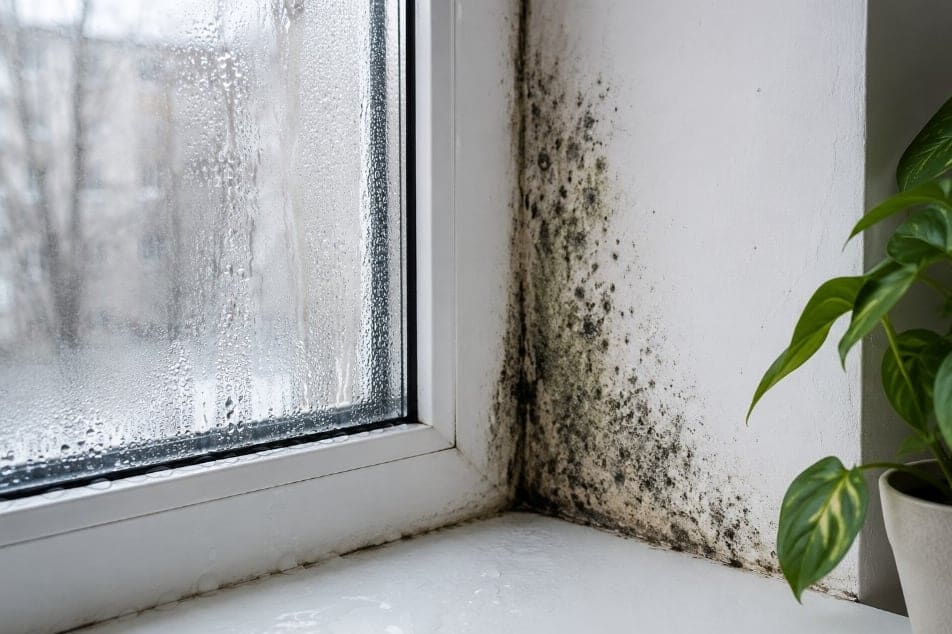
Condensation on the inside of windows is one of the most visible signs of high humidity. Warm air holds water vapour; on cold glass it can turn into liquid water.
Occasional fogging after a shower or cooking is not always serious. Regular condensation in a bedroom or living room is a reason to check humidity and ventilation.
A musty smell
A musty smell can be linked to persistent moisture, poor air movement or damp materials. Check places where air barely circulates: behind wardrobes, behind the sofa, in corners, around windows, in bathrooms, in closets and under the bed.
These spots often smell musty before the middle of the room does. If the odour sits in a mattress or upholstery, check textiles as well as walls.
Damp patches or mould
Mould is a warning to find the moisture source: condensation, weak ventilation, a thermal bridge, a leak, or a building or plumbing issue.
The WHO reports that persistent dampness and microbial growth indoors are associated with more respiratory symptoms, allergies and asthma.
Why is humidity too high?
Moisture is produced naturally in every home. The problem starts when water vapour is not removed quickly enough and accumulates.
Cooking
Cooking, washing up and hot water add vapour. Use the extractor and ventilate the kitchen.
Showers and baths
The bathroom is naturally one of the wettest rooms. After a shower, send moist air outside with the fan or a window before it spreads through the apartment.
Drying laundry indoors

Wet laundry releases water into the air. In a small, poorly ventilated room humidity can rise quickly.
People, pets and everyday living
Breathing adds moisture too. That is why a bedroom can feel worse overnight.
Insufficient ventilation
If moist air is not exchanged, it builds up. That is one reason well-sealed apartments — including some panel-block flats — can hold humidity.
Why does condensation form on windows and walls?
Warm air can hold more water vapour than cold air. When warm, humid air meets a cold surface, vapour can turn into liquid water. That process is condensation.
Moisture may appear on glass and frames, in corners, on cold exterior walls and around thermal bridges.
Repeated condensation can create conditions favourable to mould. Controlling humidity, ventilating and removing the moisture source matter more than wiping the glass.
Humidity, mould and dust mites
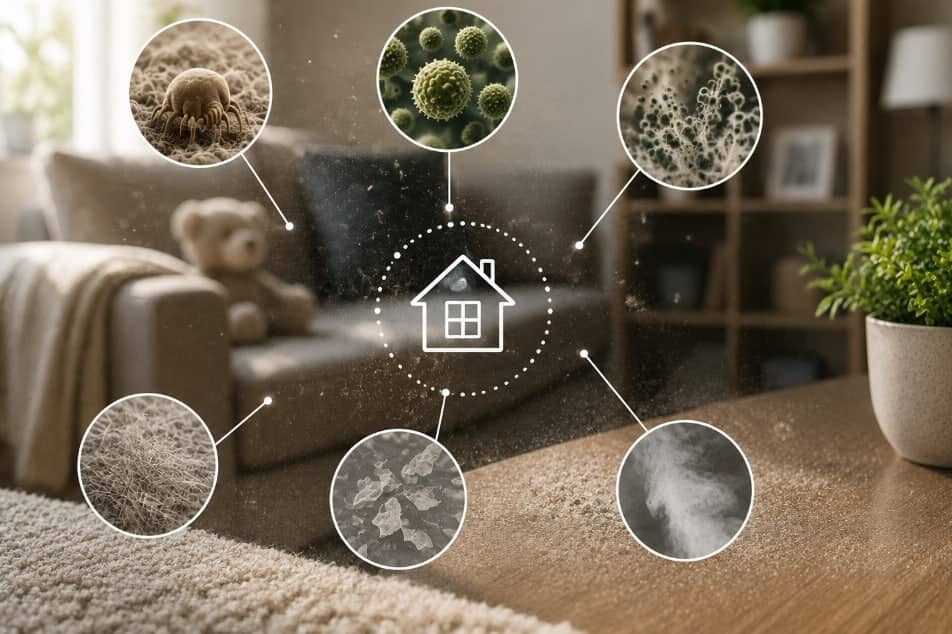
High humidity is not the same as mould or dust mites, but it can support both.
For mould, persistent damp is the key factor. The WHO states that preventing or minimising long-term dampness and microbial growth is the most important way to reduce related health risks.
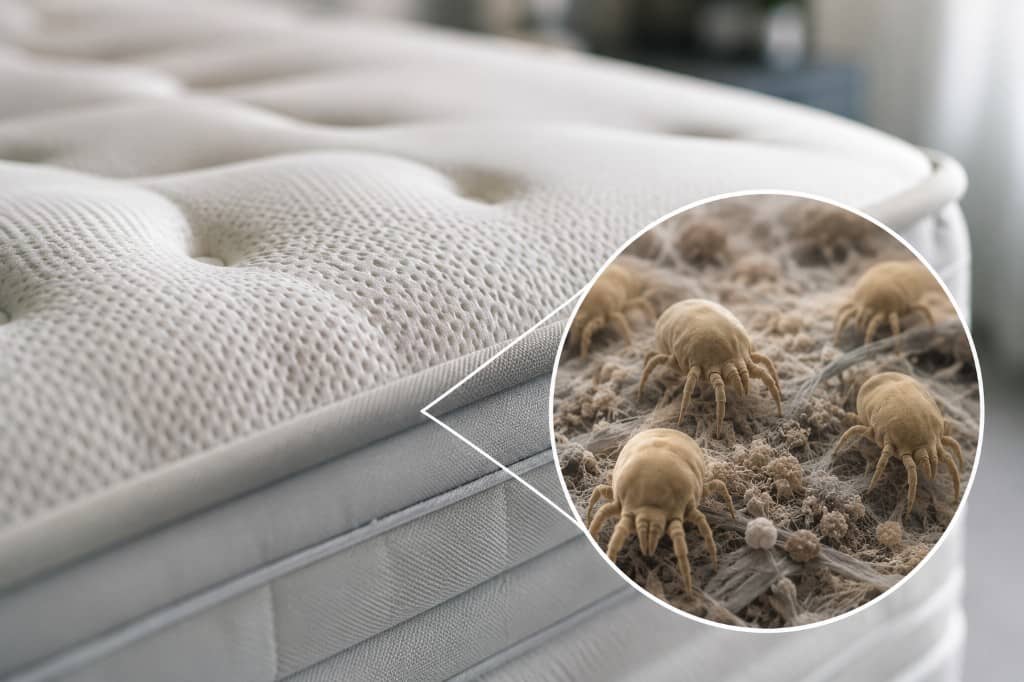
Higher humidity can also create more favourable conditions for house dust mites — especially in bedrooms with mattresses, pillows and duvets. More on that in dust mites in a mattress.
How can you reduce humidity in an apartment?
If humidity stays high, start with simple steps. You can often reduce it without a dehumidifier — by ventilating and removing steam at the source.
How to reduce condensation and prevent mould
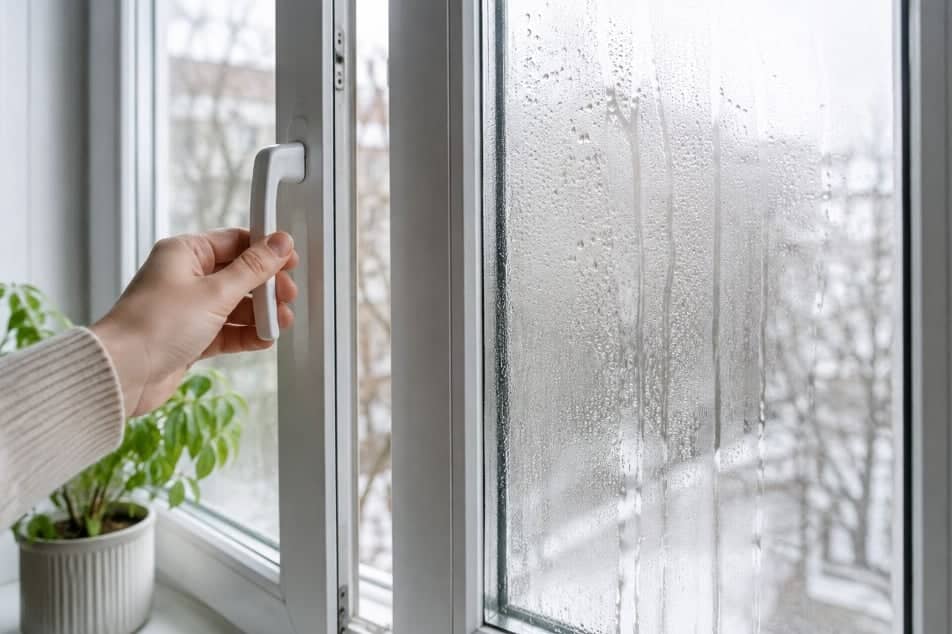
Moist air needs to leave — that is the basic step against fogged windows and mould. In winter, short intensive airing usually works better than leaving a window ajar for hours. Bathroom and kitchen extractors should actually work.
Use the cooker hood and bathroom fan
Cooking and showering produce a lot of vapour. Removing it at the source is more effective than dealing with it later in the living room.
Use a hygrometer
Without a measurement you are guessing. A simple indoor humidity meter shows whether your steps are working.
When to consider a dehumidifier
If normal ventilation is not enough, a dehumidifier can help. It cannot replace repairing leaks, insulation problems or other building defects. If water is entering the apartment, fix that source first.
What if humidity keeps coming back?
If you ventilate regularly but humidity stays high, look for a leak, pipe issue, thermal bridge, poor insulation, window problem, weak ventilation or damp building fabric.
Wiping condensation or spraying mould is not enough. The EPA stresses that mould control means fixing the moisture source, not only the visible growth. If you suspect a building defect, call a specialist.
How humidity affects sofas, mattresses and carpets
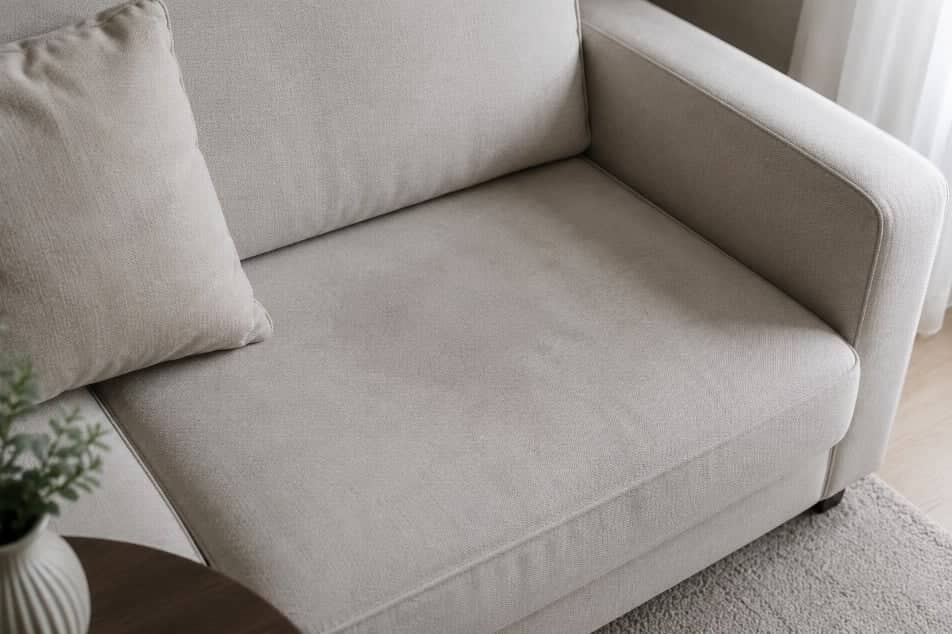
Humidity is not only about walls and windows. Mattresses, sofas, armchairs, carpets, upholstered beds and curtains can absorb and hold moisture.
If textiles stay damp, they can smell musty and take longer to dry. After a leak or wet cleaning, the EPA recommends drying wet or damp materials within 24–48 hours to reduce mould risk. Typical drying times after upholstery cleaning are in how long a sofa takes to dry.
When is an indoor humidity problem serious?
Pay attention if:
- humidity repeatedly exceeds 60%
- windows regularly fog up
- damp patches appear on walls
- there is a musty smell
- mould appears or returns after cleaning
- furniture or textiles stay damp
- you suspect a leak
If mould is extensive or the apartment has had significant water damage, cosmetic cleaning is not enough. The EPA suggests professional help for larger contamination or water damage.
How to keep a healthier indoor climate
The best results come from several habits together. Do not chase only the number on the hygrometer: humidity, temperature, airflow and surface temperature all interact.
- Monitor humidity with a hygrometer.
- Ventilate regularly — short and intensive in winter.
- Remove steam when cooking and showering.
- Avoid drying wet laundry in an unventilated room.
- Check corners, windows and space behind furniture.
- Do not leave wet textiles damp for long.
- Look for the cause, not only the symptoms.
Humidity in Prague apartments
Prague apartments vary widely — from modern, well-ventilated buildings to older flats with colder walls, weaker airflow or thermal bridges. There is no single fix that works for every home.
If a sofa, mattress or carpet repeatedly smells musty, look at the room conditions as well as the textile. Professional cleaning can lift dirt and odour, but it will not fix a structural or ventilation source of moisture. If the source stays, the smell can return.
Professional textile cleaning in Prague
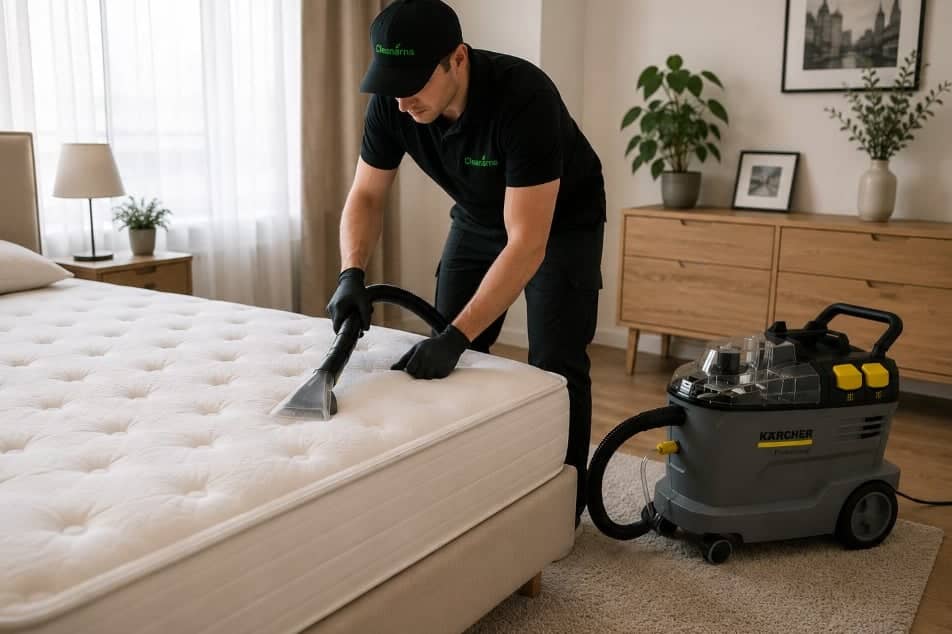
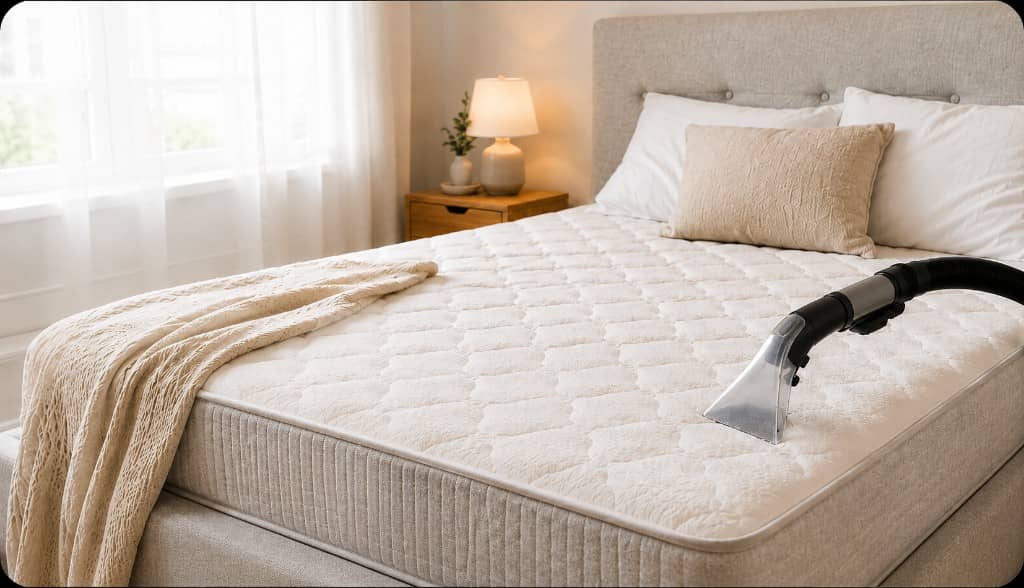
If high humidity has left a musty smell or soil in textiles, deep cleaning can help. Cleanárna offers mattress cleaning, sofa cleaning and carpet cleaning in Prague and the surrounding area. You can send a photo for an indicative price.
Textile cleaning is not a substitute for fixing leaks or building defects. The best outcome combines a healthier indoor climate, removing the cause, and caring for the fabrics themselves. See our mattress cleaning guide for practical care.
Sources & research
Dust mite facts in this article come from peer-reviewed studies and health organisations — not clickbait claims like “millions of mites in one mattress”.
- U.S. EPA — A Brief Guide to Mold, Moisture and Your Home
- U.S. EPA — Mold Cleanup in Your Home
- U.S. EPA — What are ten things I need to know about mold?
- WHO — Guidelines for Indoor Air Quality: Dampness and Mould
- ESTAV.cz — How to recognise high indoor humidity problems
- Klimaguru.cz — Excessively high humidity in an apartment
Frequently asked questions
What is the ideal humidity in an apartment?
The EPA recommends keeping relative humidity below 60%, ideally around 30–50%. Comfort can vary with temperature and how the home is used.
How can I tell if indoor humidity is too high?
Typical signs are regularly fogged windows, condensation on cold surfaces, a musty smell, damp patches or mould. A hygrometer is the most reliable check.
How can I reduce humidity without a dehumidifier?
Start with short intensive ventilation and extract steam when cooking and showering. Limit indoor laundry drying. If it still stays high, a dehumidifier may help — and any leak or building issue still needs fixing.
Why do windows fog up?
Warm humid air hits cold glass and water vapour condenses. Occasional fogging after a shower is common. Regular condensation from the inside points to high humidity or weak ventilation.
Does ventilating help against mould?
Yes, if the cause is high humidity and poor air exchange. Ventilation alone is not enough if water is leaking or the building is damp.
Can high humidity affect a mattress or sofa?
Yes. Textiles can absorb and hold moisture. A persistently damp environment can add to musty odours and more favourable conditions for some biological contaminants.
Ready for professional cleaning?
Calculate your price online — no obligation, instant estimate.
Get instant price