A clean home is more than what catches your eye
Your home may look perfectly clean, yet some of the places you use every day can quietly collect dust, pet hair, skin particles, grease and other everyday dirt.
You vacuum the floor. You wipe the surfaces. You clean the bathroom and kitchen.
But a clean home is about more than what immediately catches your eye.
Some surfaces are used every day but cleaned only occasionally. Others are hidden underneath furniture or deep inside textiles, making them easy to overlook during a normal cleaning routine.
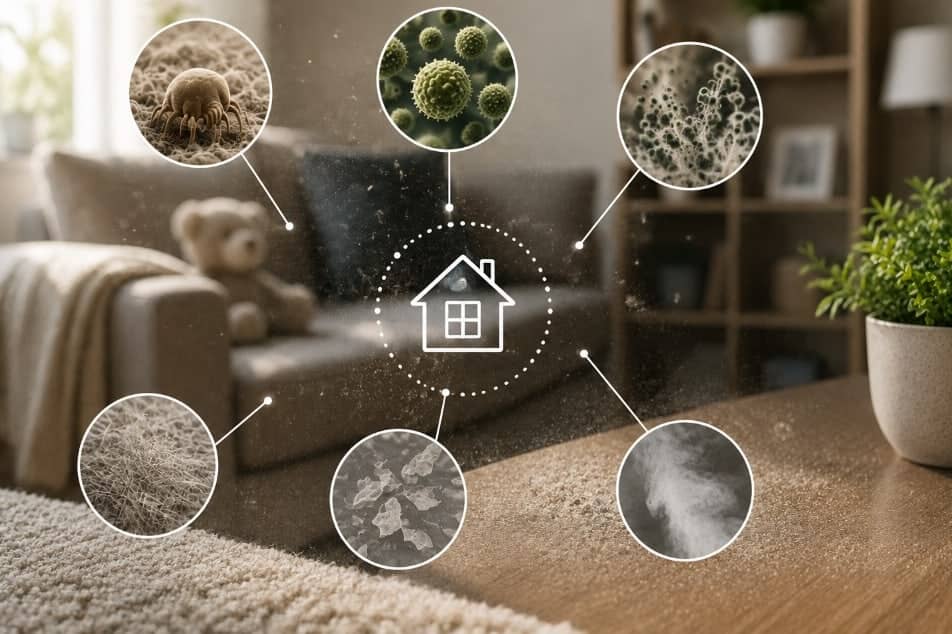
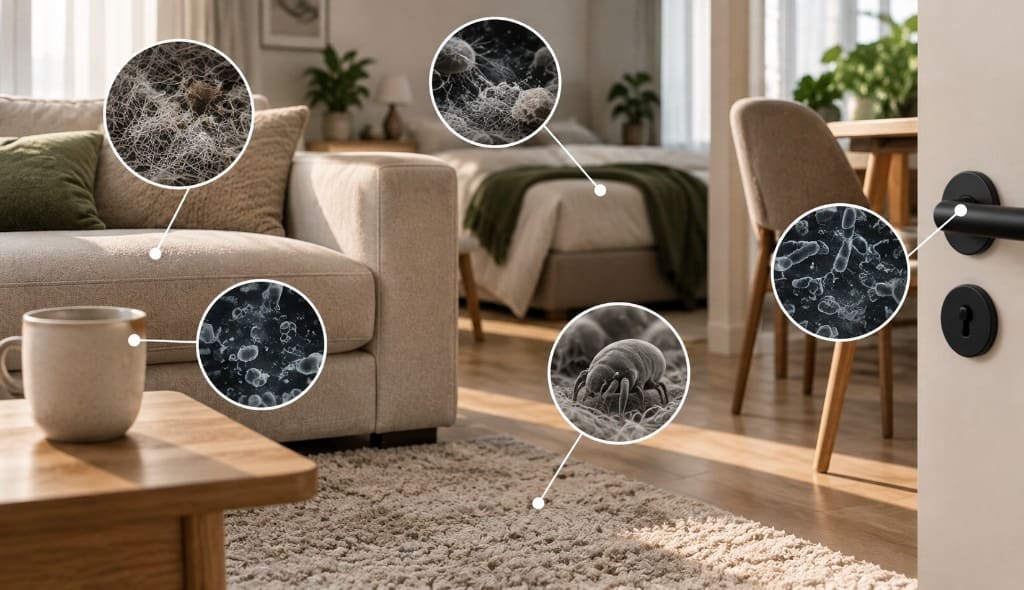
This also matters for indoor environmental quality. Household dust can contain a mixture of particles and allergens, while dust mites commonly thrive in mattresses, upholstered furniture and carpets, particularly in warm and humid environments.
Here are five areas of the home that deserve much more attention than they usually get.
1. Your Sofa and Upholstered Chairs
You use them every day. But you probably clean them much less often than your floor.
Your sofa is one of the most heavily used items in your home.
You sit on it, relax, eat, work and watch television. Children play on it, and pets may spend several hours there every day.
Yet regular cleaning often means little more than a quick vacuum or wiping an obvious stain.
Over time, upholstery can collect:
- dust
- crumbs
- pet hair
- skin particles
- body oils
- stains
- everyday grime
Upholstered furniture is also one of the places where dust mites and their allergens can be found. More in allergens at home.
How do you know your sofa needs a deeper clean?
You do not necessarily have to wait until it looks obviously dirty. Look for:
How often should you clean the sofa?
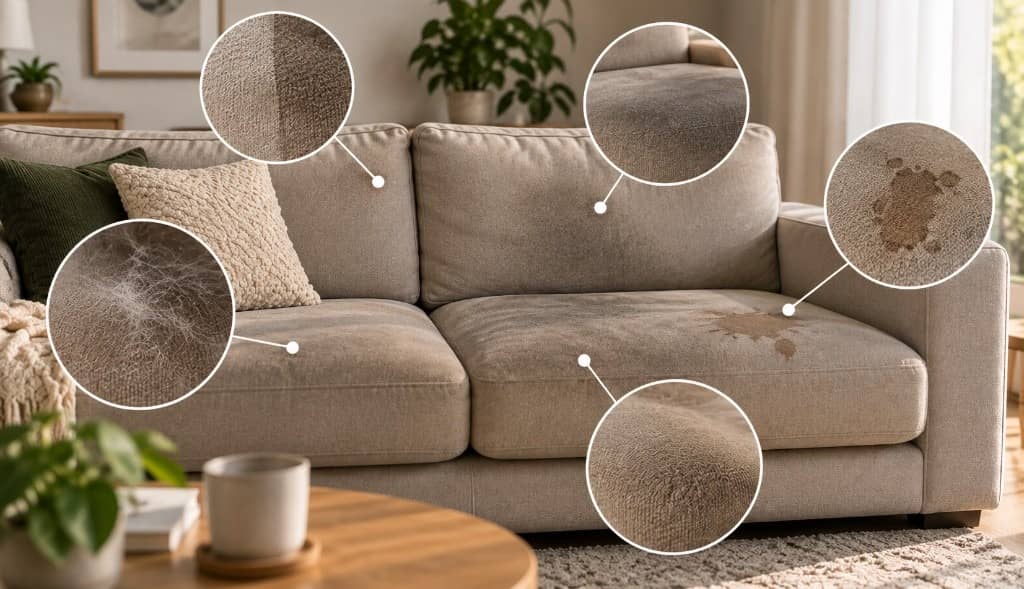
Typical signs that deeper care is due:
- fabric that has lost its original colour
- darker areas where people sit most often
- visible stains or marks
- hair trapped in the upholstery
- a general lack of freshness
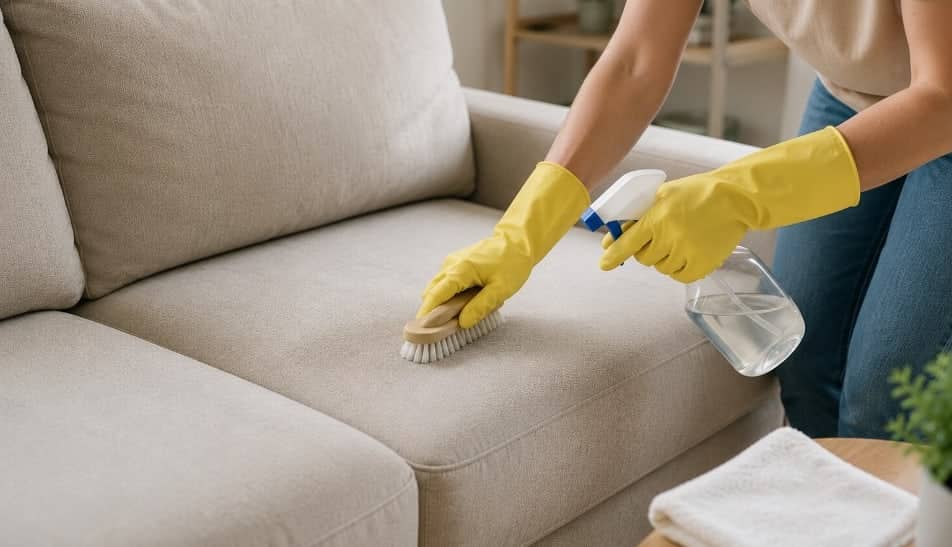
Regular vacuuming is an important part of maintenance. When dirt becomes more deeply embedded, professional upholstery cleaning may be appropriate. See how to clean a sofa and upholstery cleaning in Prague.
2. Your Mattress
Clean bedding does not automatically mean a clean mattress.
The mattress is one of the most overlooked items in the bedroom.
We change our sheets regularly, but the mattress itself may go years without thorough cleaning.
And we spend several hours in direct contact with it every night.
Dust, sweat and skin particles can gradually build up in the sleeping environment. Mattresses and bedding are also common environments for dust mites and their allergens.
What can you do at home?
Start with the basics:
- wash bedding regularly
- vacuum the mattress from time to time
- ventilate the bedroom
- use a suitable protective cover
- avoid prolonged exposure to moisture
AAAAI recommends regular washing of bedding and allergen-resistant covers for mattresses and pillows for people who are sensitive to dust mites.
But when a mattress has visible stains, significant soiling or has not been thoroughly cleaned for a long time, deeper mattress cleaning may be worth considering.
3. Your Carpet — Especially the Edges and Areas Under Furniture
“But I vacuum it regularly.”
Good.
Now ask yourself: when did you last look closely at the edges or underneath the sofa?
Carpets can collect dust and other particles. In homes with pets, they can also collect pet hair and animal allergens.
The areas we most often miss:
- Edges along the walls — harder to vacuum thoroughly
- Under the sofa — can remain untouched for weeks or months
- Under the coffee table — crumbs and dust gradually accumulate
- High-traffic areas — in front of the sofa, hallway or dining area
When is vacuuming no longer enough?
When the carpet starts looking grey or dull, develops an odour, high-traffic areas become darker, or dirt remains even after thorough vacuuming.
That is when deeper cleaning may make sense. See how to clean a carpet and carpet cleaning.
4. The Surfaces You Touch Every Day
This one is less about deep dirt and more about frequency.
Some surfaces are touched constantly.
Think about:
- door handles
- light switches
- handrails
- remote controls
- work surfaces
- kitchen handles
The CDC recommends regularly cleaning high-touch surfaces such as light switches, doorknobs and countertops. It also notes that ordinary cleaning with soap or detergent removes dirt and most harmful microorganisms from surfaces.
Why are these places so easy to forget? Because they rarely look dramatically dirty.
You notice a mark on the floor. You notice a stain on the sofa. But you press a light switch or open a door without even thinking about it.
That is why consistency matters more here than a major deep clean once in a while.
5. Pet Beds, Blankets and Other Pet Textiles
Your dog or cat probably has a favourite spot. And that is exactly where dirt can build up faster than you realise.
A pet bed may be used for several hours every day.
Over time, it can collect:
- hair
- skin particles
- dust
- skin oils
- crumbs
- odours
- everyday dirt
Animal allergens can come from skin particles, saliva and other biological material and can spread through household dust.
That means it is not enough to clean the floor around the pet bed. Also pay attention to the bed itself, blankets, mats, the sofa and the carpet around your pet’s favourite spot.
Washable textiles are easiest to maintain regularly. Larger or non-washable items may need deeper professional cleaning. More: what pets leave behind at home.
Which areas of the home are neglected the most?
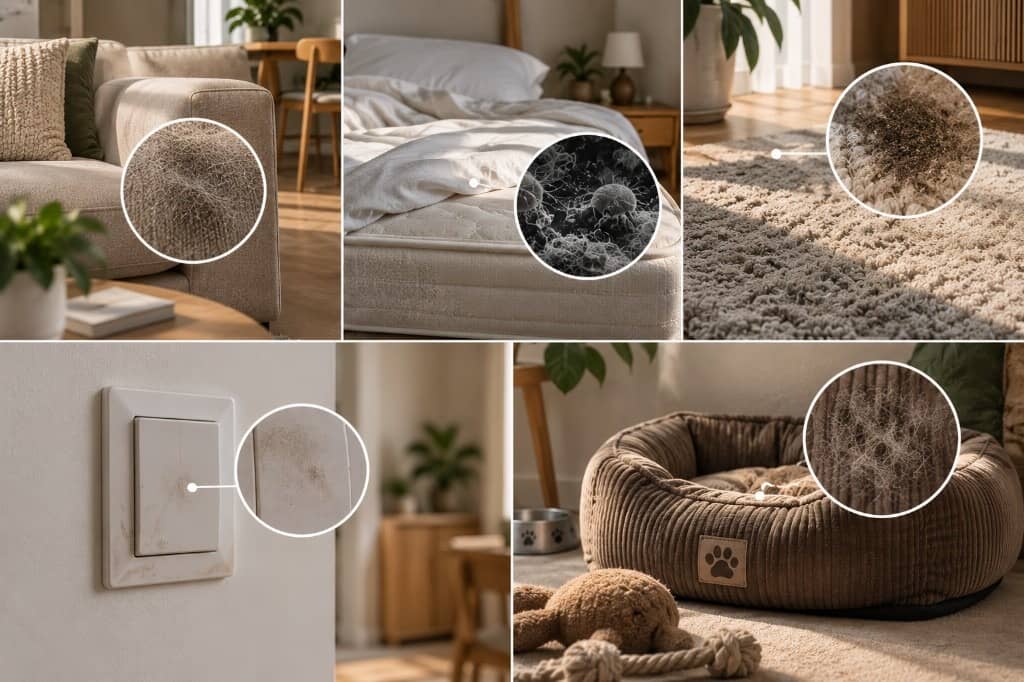
All five have something in common:
Either we use them every day — or we barely notice them while cleaning.
That is exactly why they get overlooked.
The sofa just looks like a sofa. The mattress is hidden under the sheets. The carpet looks clean until you look more closely. A light switch is tiny and easy to ignore. And a pet bed is often treated as something that is supposed to get dirty anyway.
How Often Should You Clean These Areas?
There is no single schedule that works for every household.
Frequency depends on the number of people in the home, children, pets, how heavily surfaces are used and how quickly they become soiled.
As a practical starting point:
| Area | Basic maintenance |
|---|---|
| Handles and switches | Regularly, depending on use |
| Sofa | Regular vacuuming + deeper cleaning when needed |
| Carpet | Regular vacuuming + deep cleaning based on use |
| Mattress | Regular maintenance + deeper cleaning based on condition |
| Pet bed | Regular washing according to type and use |
| Blankets and throws | Based on how often they are used |
For textiles, it is better to pay attention to their actual condition than to follow one rigid schedule.
What About Dust, Allergens and Dust Mites?
It is important not to confuse ordinary household dirt with something being “dangerously dirty”.
Every home contains dust.
The issue is that dust and other particles can build up over time, especially in textiles that are difficult to clean thoroughly.
AAAAI notes that dust mites thrive in warm, humid environments and are commonly found in bedding, upholstered furniture and carpets.
Moisture also matters. WHO recommends preventing persistent dampness and mould growth indoors because damp and mouldy environments are associated with increased respiratory symptoms, allergies and asthma. See also humidity in the apartment.
5 Questions to Ask Yourself Today
Look around your home and ask:
- When was the last time the sofa was thoroughly cleaned?
- When did you last vacuum under the furniture?
- When was the mattress last properly cleaned?
- When did you last wash your pet’s bed?
- Which surfaces do you touch every day but almost never clean intentionally?
If you answered “I don't remember” several times, you have probably just identified some of the most overlooked areas in your home. Related: 5 things you forget to clean.
A Clean Home Does Not Need to Be Sterile

The goal of household cleaning is not to remove absolutely everything.
It is much more important to regularly remove accumulated dirt and pay attention to surfaces that are heavily used or difficult to clean.
That is why everyday maintenance works best when combined with deeper textile cleaning when the condition of the material calls for it.
A sofa, carpet, mattress or upholstered chair can look clean while dirt gradually builds up inside the fibres — something ordinary vacuuming cannot always remove completely.
That is where professional cleaning can make a difference.
Cleanárna provides professional sofa, carpet, mattress, chair and upholstery cleaning in Prague and the surrounding area.
The cleaning approach is selected according to the specific material and its condition.
Not sure what needs cleaning?
Send us a photo of your sofa, carpet, mattress or upholstery. We can recommend a suitable cleaning method and give you an estimated price. Order.
A cleaner home. A better everyday.
Sources & research
Dust mite facts in this article come from peer-reviewed studies and health organisations — not clickbait claims like “millions of mites in one mattress”.
Frequently asked questions
Which places in the home are most often overlooked?
Sofas and upholstery, mattresses, carpet edges and under furniture, high-touch surfaces (handles, switches), and pet textiles.
Is vacuuming the sofa enough?
Regular vacuuming is essential. For long-term soiling, stains, odours or dull fabric, deeper upholstery cleaning may be needed.
Why clean the mattress if I change the sheets?
Clean bedding does not mean a clean mattress. Dust, sweat and skin particles build up in it, and mattresses are a common place for dust mites.
When is vacuuming a carpet no longer enough?
When it looks grey, holds odours, high-traffic areas look worn, or dirt remains after thorough vacuuming — deeper cleaning may help.
How often should I clean handles and switches?
Regularly depending on use. The CDC recommends cleaning high-touch surfaces; soap or detergent removes dirt and most harmful microorganisms.
Ready for professional cleaning?
Calculate your price online — no obligation, instant estimate.
Get instant price