Living with a dog or cat — and cleaning the home
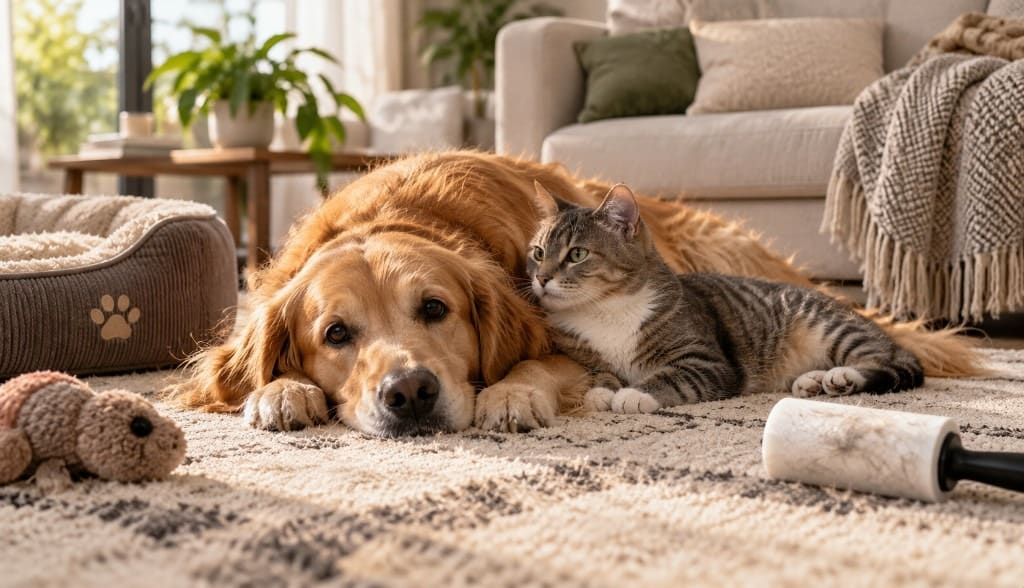
Dogs and cats are part of the family. But living with a pet also means dealing with hair, skin particles, allergens, odours and everyday dirt that can gradually build up in household textiles.
Having a pet does not mean having a dirty home.
It simply means that some parts of the home need a little more attention.
Vacuuming the floor is not enough.
Pet hair can become trapped in carpets, sofas, chairs, mattresses, blankets and pet beds. And hair is only part of the story.
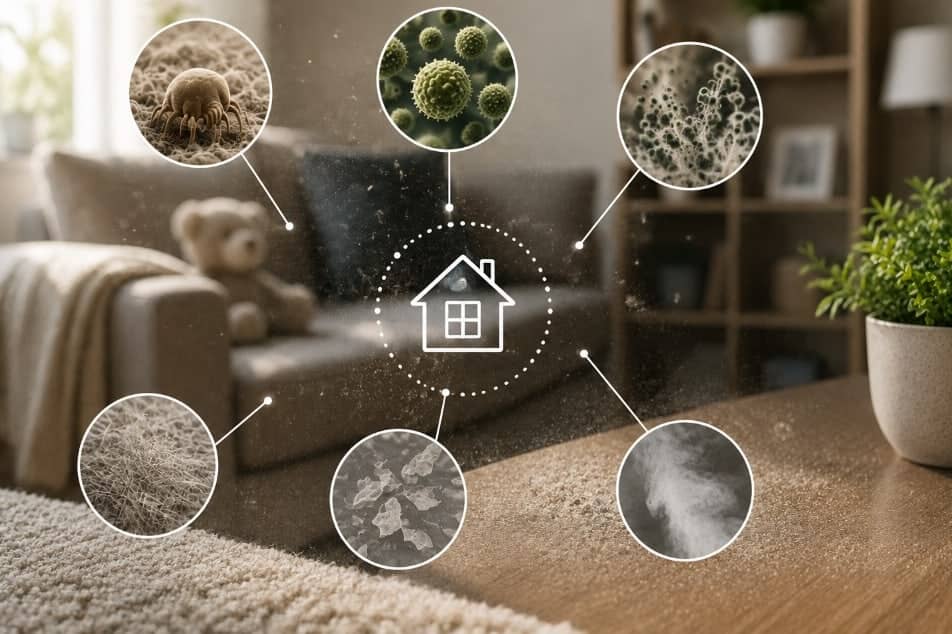
According to the EPA and AAAAI, animal allergens can come from skin flakes, saliva and urine, and these allergenic proteins can spread through household dust and settle on different surfaces.
That is why, in a home with a dog or cat, it makes sense to clean not only the floor but also the places your pet uses every day.
What does a dog or cat actually leave behind?
It is not only visible fur. Here are the main things that gradually build up in a pet-owning home.
1. Pet hair
It is the most obvious sign.
But hair does not stay only on the floor. It can become trapped in:
- carpets
- sofa and chair upholstery
- blankets
- pillows
- pet beds
- mattresses
- fabric fibres
Short hairs can sometimes be particularly difficult to remove because they work their way deep into textiles.
2. Skin flakes and allergens
Pet allergies are not simply about hair.
AAAAI explains that important animal allergens are proteins found in skin flakes, saliva and urine.
That means allergens can remain in a home even when there is very little visible hair. More in allergens at home.
3. Dust and outdoor particles
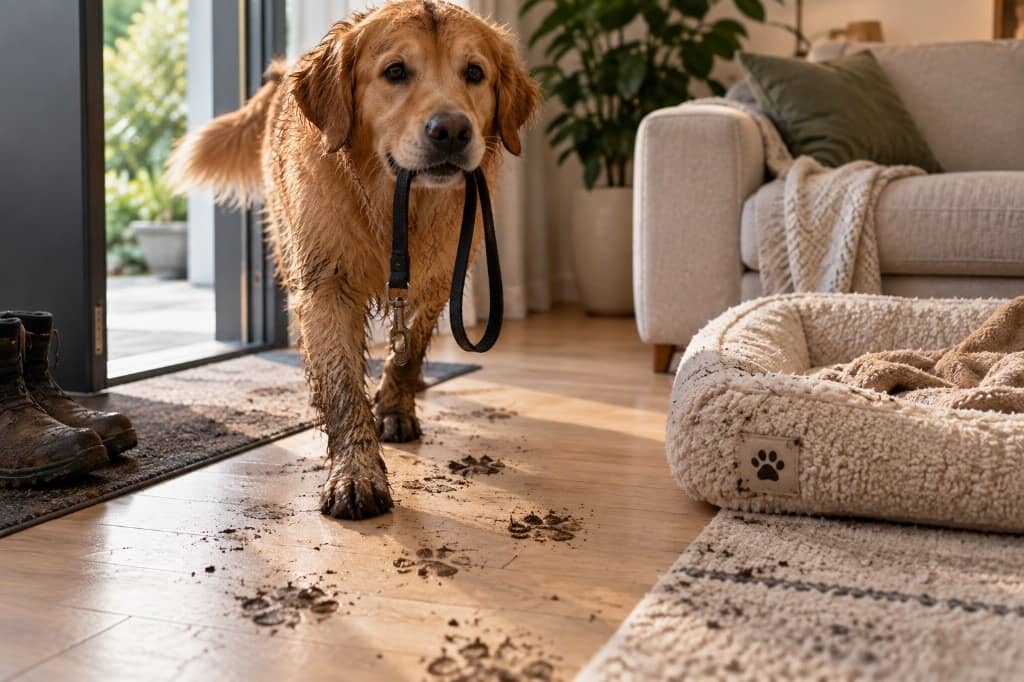
Dogs naturally bring small particles indoors on their coat and paws after walks.
Some remain on the floor, while others end up on blankets, pet beds, sofas and carpets.
That means a place where a dog regularly rests can face much more wear than textiles that are barely used.
4. Odours and skin oils
Even a healthy, clean pet has a natural smell.
Over time, regular contact between fur, skin and upholstery can make fabrics lose their freshness.
This usually shows first on the places your pet uses most: pet bed → blanket → sofa → carpet → favourite chair.
How to deal with smells in textiles: pet odour removal.
5. Small everyday messes
Wet paws, food crumbs, saliva, treats or occasional accidents can also end up on textiles.
Pet beds and blankets are particularly exposed.
Which areas need the most attention?
The heaviest load usually falls on textiles your dog or cat sleeps and rests on regularly.
The sofa
If your dog or cat regularly sleeps on the sofa, the upholstery becomes one of the most heavily used textile surfaces in your home.
Unlike a blanket, you usually cannot simply put it in the washing machine.
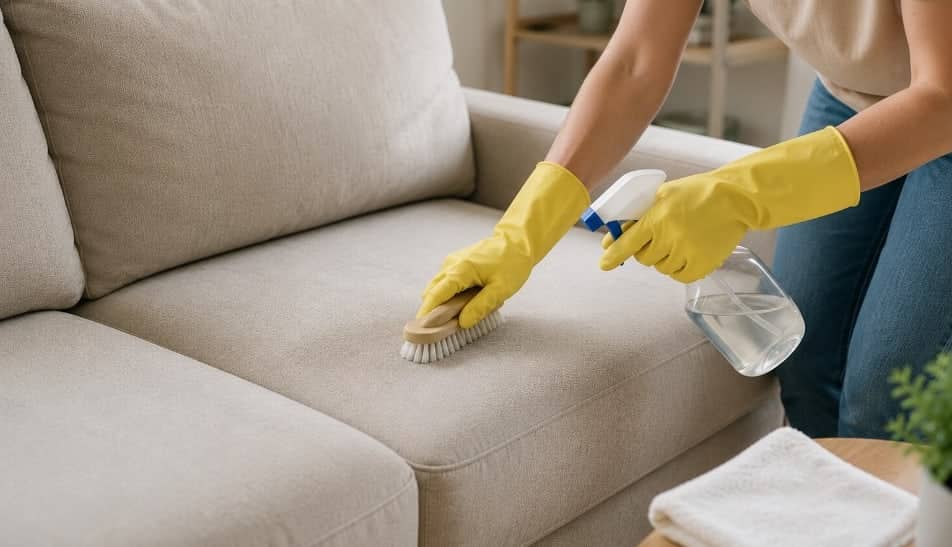
That is why sofas deserve special attention when you clean.
The EPA recommends regularly vacuuming carpets and upholstered furniture as part of reducing household dust and exposure to animal allergens.
The bed and mattress
If your pet sleeps on your bed, the issue is not only visible hair.
Pet allergens and skin particles can also become part of the bedroom environment.
AAAAI recommends keeping pets out of bedrooms for people sensitive to pet allergens and regularly washing household textiles.
If your pet regularly lies directly on the mattress, maintain more than just the sheets — think about the mattress itself too. Mattress cleaning.
The pet bed
The pet bed is probably one of the most overlooked textile items in a pet-owning household.
Your pet can spend hours there every day, allowing hair, skin flakes, oils, dust and odours to gradually build up.
The American Kennel Club gives weekly washing as a practical starting point for dog bedding, although the appropriate frequency depends on the individual pet and circumstances.
How often should you clean a pet bed?
Once a week is a sensible baseline for washing removable covers on a regularly used dog bed. Some households need more often.
For example if:
- the dog spends a lot of time outdoors
- sheds heavily
- has skin issues
- the bed gets smelly quickly
- there are multiple pets
- or the dog comes in dirty after walks
In those cases, shorten the interval.
How often should you clean when you have a pet?
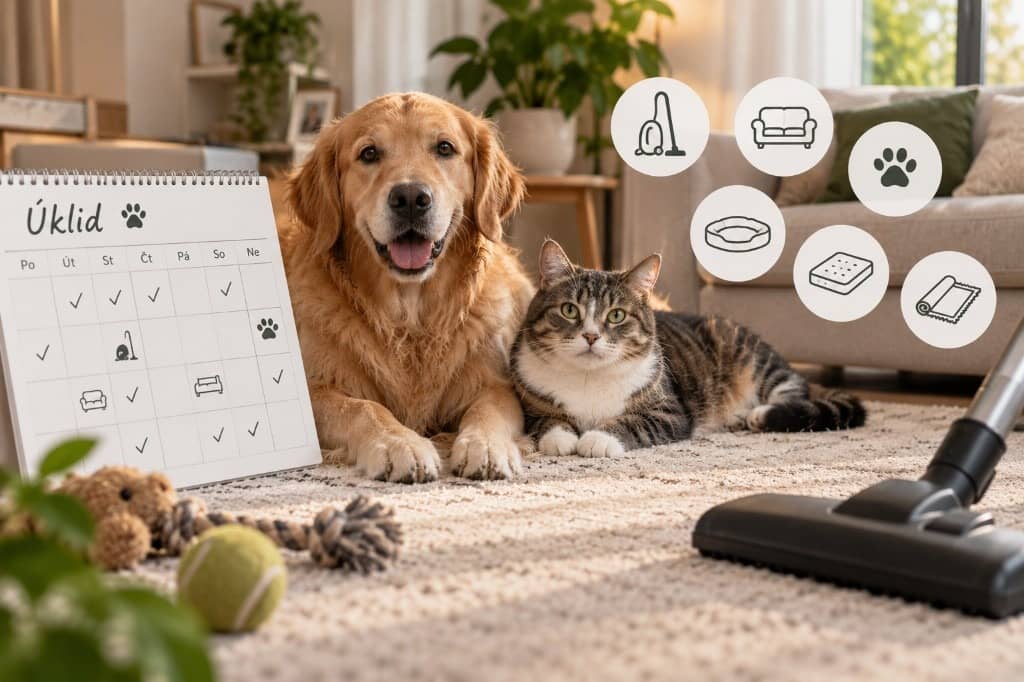
There is no single schedule that works for every home.
A better approach is to split maintenance by how often each surface is used and how dirty it gets.
Every day
In a home with pets, it helps to routinely:
- remove hair from the most used areas
- clear dirt from floors
- clean up spilled food
- ventilate
- check the places your pet uses most
You do not need to deep-clean the whole home every day.
Several times a week
Focus especially on:
- floors
- carpets
- the sofa, if your pet uses it
- the area around the pet bed
- your pet’s favourite spots
The EPA recommends vacuuming carpets and furniture weekly or more often when needed to reduce the buildup of indoor dust and allergens.
Once a week
Check and, where possible, wash:
- pet bedding and removable covers
- blankets
- removable furniture covers
- textiles your pet regularly sleeps on
Weekly washing of pet beds is often a practical baseline, but the right frequency depends on the pet and lifestyle.
Every few months or when needed
This is where everyday cleaning often falls short.
It may include:
- deeper sofa cleaning
- professional carpet cleaning
- mattress cleaning
- thorough cleaning of upholstered chairs
- cleaning larger or non-washable pet beds and mats
That does not mean everyone must clean all of these every three months.
Frequency depends on use intensity and the real condition of the material.
A home with one short-haired dog needs different care from a home with two cats or several long-haired dogs.
When is vacuuming no longer enough?
This is an important question.
If you vacuum the sofa or carpet regularly, but:
- you still see hair worked into the fibres
- the surface looks grey or dull
- watermarks or stains appear
- odours remain
- some areas are much darker than others
- or your pet uses the same spot every day
the problem may no longer be only on the surface.
Regular vacuuming and deep cleaning are not the same.
Vacuuming helps limit surface dust and allergens, but textiles with long-term or deeper soiling may need a more thorough approach. The EPA recommends regular vacuuming of carpets and furniture as part of reducing dust and pet allergen buildup.
Can cleaning help when someone in the home has allergies?
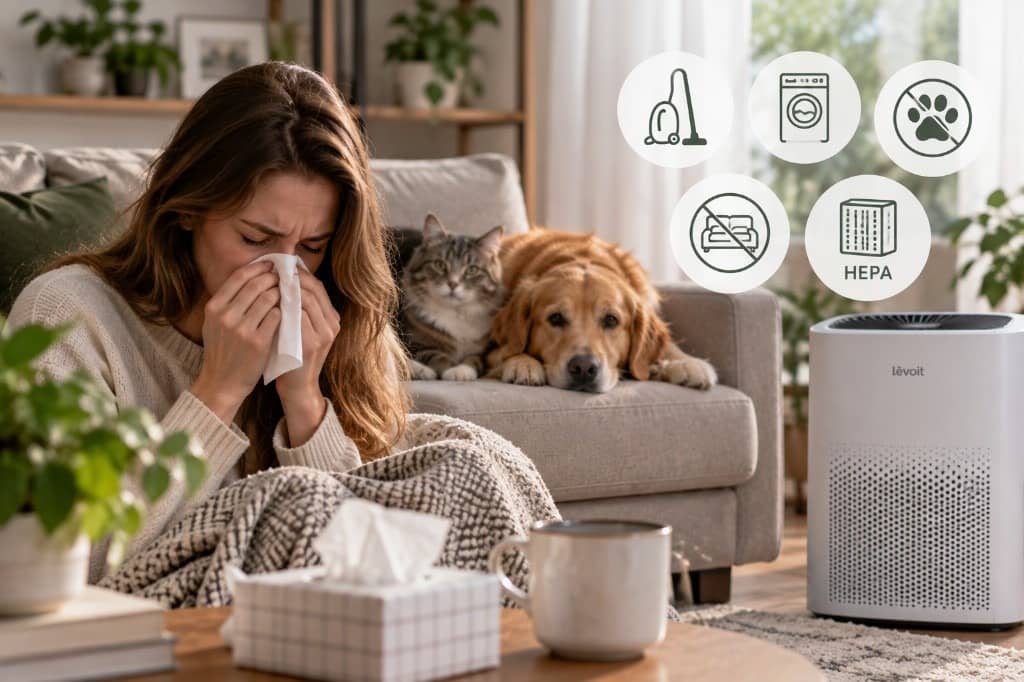
It is important to be realistic.
Cleaning can help reduce dust and contamination, but it cannot completely remove all pet allergens from a home.
AAAAI and EPA recommend a broader approach, including regular cleaning, washing textiles, keeping pets out of bedrooms and, where appropriate, using HEPA filtration.
Anyone with significant allergy or asthma symptoms should discuss their symptoms with a doctor or allergist.
How to keep the sofa cleaner when your pet sleeps on it
The best approach combines a few simple habits.
- Use a washable blanket or throw — easier than washing the whole sofa
- Remove hair regularly — the longer it stays, the deeper it works into fibres
- Vacuum the upholstery too — not only the floor
- Treat spills quickly — fresh stains are easier than old ones
- Plan deeper cleaning from time to time — a pet-used sofa gets much more wear
What about the carpet?
Carpets are comfortable for pets. They can also trap hair and other particles.
Vacuum regularly — not only the centre, but also:
- edges
- corners
- under furniture
- places where your pet lies most
If the carpet starts to smell, look grey, or still holds hair after thorough vacuuming, deep carpet cleaning may help. See also how to clean a carpet.
What to clean most often after pets
A practical guide for a typical pet-owning home:
| What to clean | Practical interval |
|---|---|
| Floors | daily to several times a week, depending on dirt |
| Most-used spots | several times a week |
| Carpet and upholstery | vacuum at least weekly; more often if needed |
| Dog/cat bed | usually wash removable parts weekly |
| Blankets and throws | depending on use, often weekly |
| Sofa | vacuum regularly; deeper clean as needed |
| Mattress | regular care + deeper cleaning when needed |
| Armchairs and upholstered chairs | regular vacuuming + deeper clean as soiled |
Important note: This table is not a medical standard. It is a practical guide for a typical home. Needs vary with the number of pets, size, shedding, lifestyle and health.
Having a pet does not mean having a dirty home
You do not need to spend your entire life fighting pet hair.
A much better approach is to focus on the surfaces your pet uses every day.
Sofas, carpets, mattresses, pet beds, blankets and upholstered furniture deserve particular attention because they are repeatedly exposed to hair, skin particles, dust and everyday dirt.
The more intensively your pet uses them, the more often they need care. See also 5 things you forget to clean.
When to call professionals
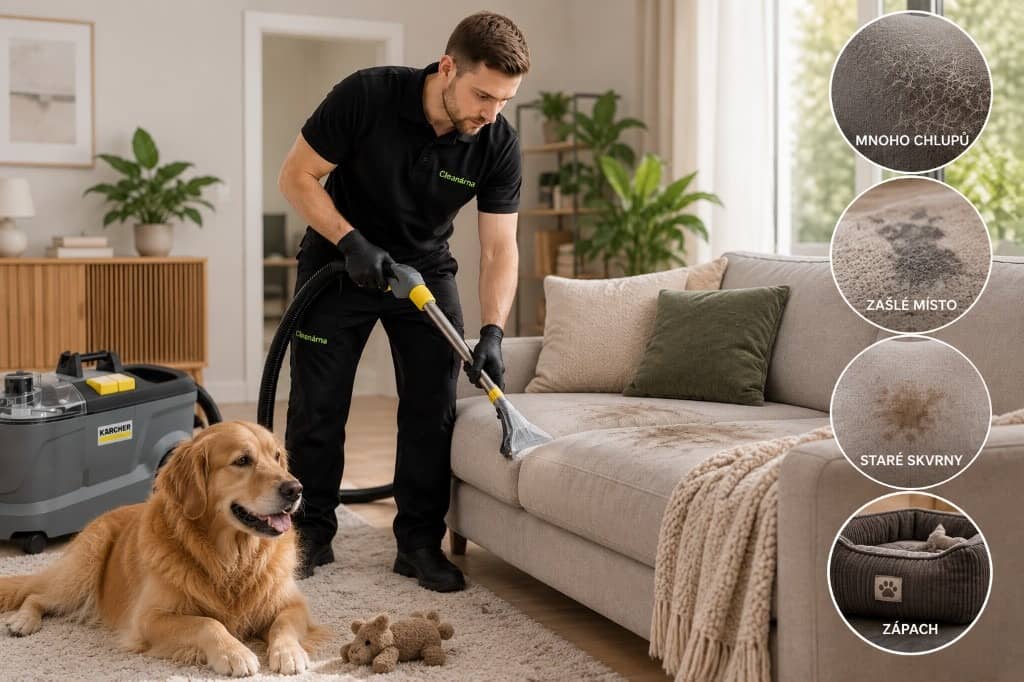
Home maintenance is the foundation.
Professional cleaning makes sense when dirt has built up so much that vacuuming and washing are no longer enough.
For example when:
- the sofa is full of hair
- the carpet has grey or high-traffic areas
- upholstery has older stains
- the textile smells
- or you have a large non-washable pet bed or mat
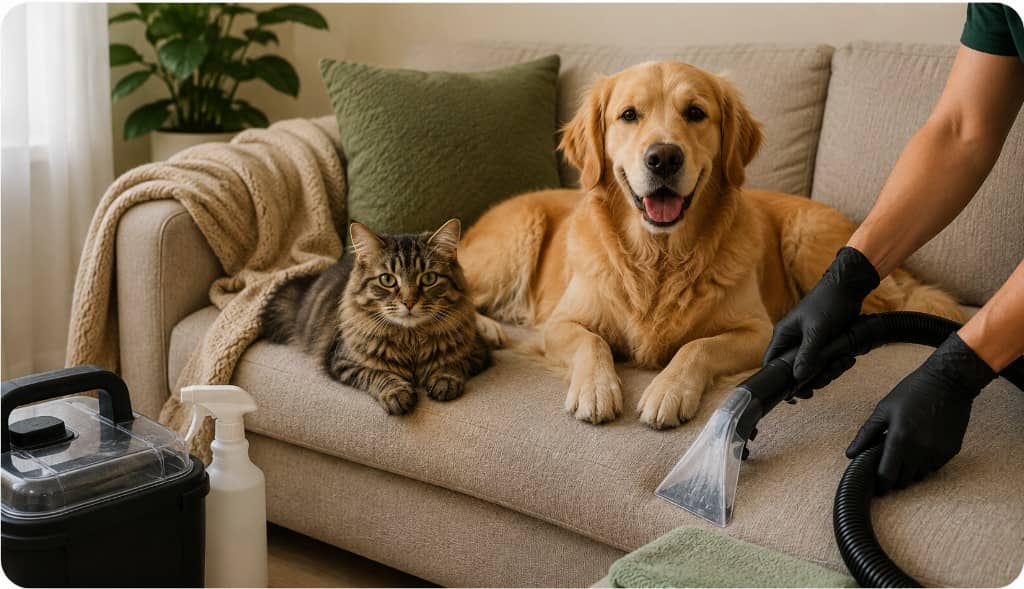
Cleanárna focuses on professional sofa, carpet and mattress cleaning in Prague and the surrounding area.
We use professional extraction equipment and adapt the process to the specific material and condition.
Have a dog or cat and not sure what already needs cleaning?
Send us a photo of the sofa, carpet, mattress or pet bed.
We can recommend a suitable approach and an estimated price. You can start an order.
A cleaner home. A better everyday.
Sources & research
Dust mite facts in this article come from peer-reviewed studies and health organisations — not clickbait claims like “millions of mites in one mattress”.
Frequently asked questions
Is vacuuming the floor enough if I have a dog or cat?
No. Hair, dander, odours and other dirt also build up in carpets, sofas, blankets, pet beds and mattresses. Clean the places your pet uses every day too.
How often should I wash a dog or cat bed?
Once a week is a sensible baseline for removable covers. Wash more often if the pet sheds heavily, goes outdoors a lot, the bed smells quickly, or you have multiple pets.
When is vacuuming no longer enough for a sofa or carpet?
When hair stays in the fibres, the surface looks dull, odours remain, stains appear, or the pet uses the same spot daily. Deeper cleaning may then be needed.
Does cleaning help with pet allergies?
It can reduce dust and allergens, but it cannot remove all pet allergens. AAAAI also recommends limiting bedroom access, washing textiles and, where appropriate, HEPA filtration. See a doctor for significant symptoms.
How can I keep the sofa cleaner if my pet sleeps on it?
Use a washable throw, remove hair regularly, vacuum the upholstery, treat spills quickly and plan deeper cleaning from time to time.
Ready for professional cleaning?
Calculate your price online — no obligation, instant estimate.
Get instant price