Why a sofa can look worn sooner than you expect
Your sofa does not have to be old to start looking worn. Everyday use, stains, dust and incorrect cleaning can gradually change the appearance of upholstery and shorten its useful life.
A sofa is one of the most frequently used pieces of furniture in any home.
We sit on it every day, eat, work and relax there. Children play on it, while pets may spend hours sleeping on the same cushions.
Yet many people only think about sofa cleaning once a visible stain appears.
The problem is that some of the factors that affect upholstery work gradually and may not be obvious at first.
Here are three of the most common.
1. Stains and Incorrect DIY Cleaning
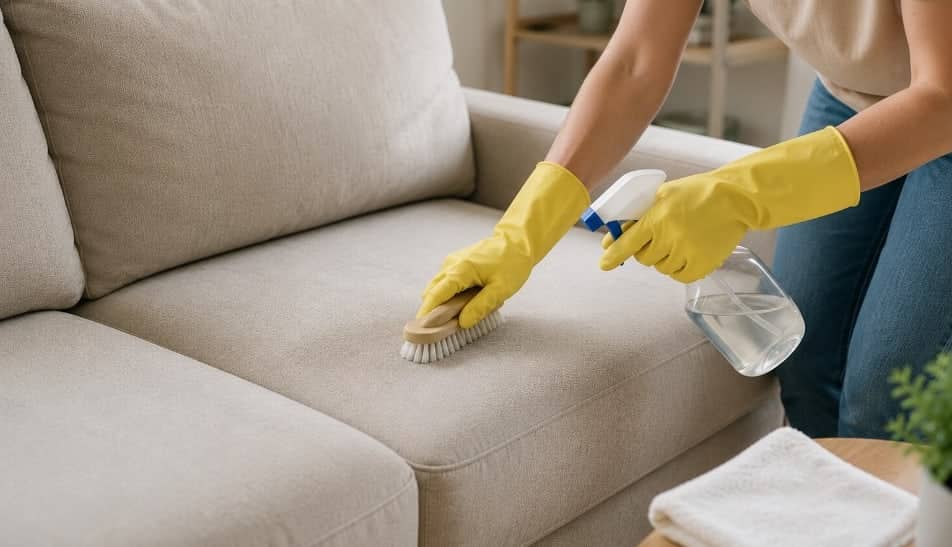
The stain itself is not always the biggest problem. The way you try to remove it can be.
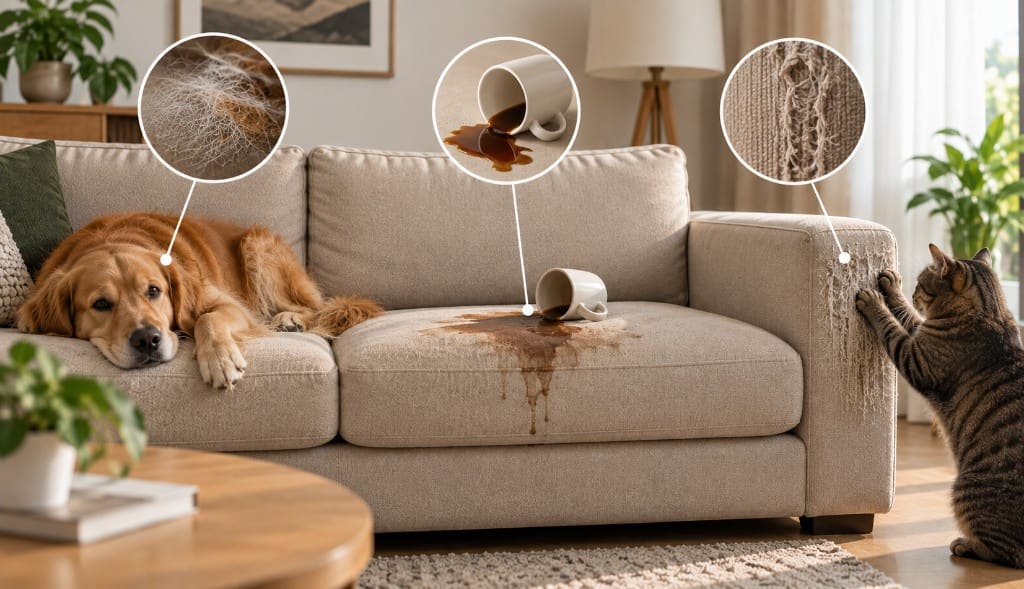
Coffee, wine, food, grease and everyday accidents are part of normal life.
When something spills, it is tempting to grab whatever cleaning product happens to be nearby.
That can be a mistake.
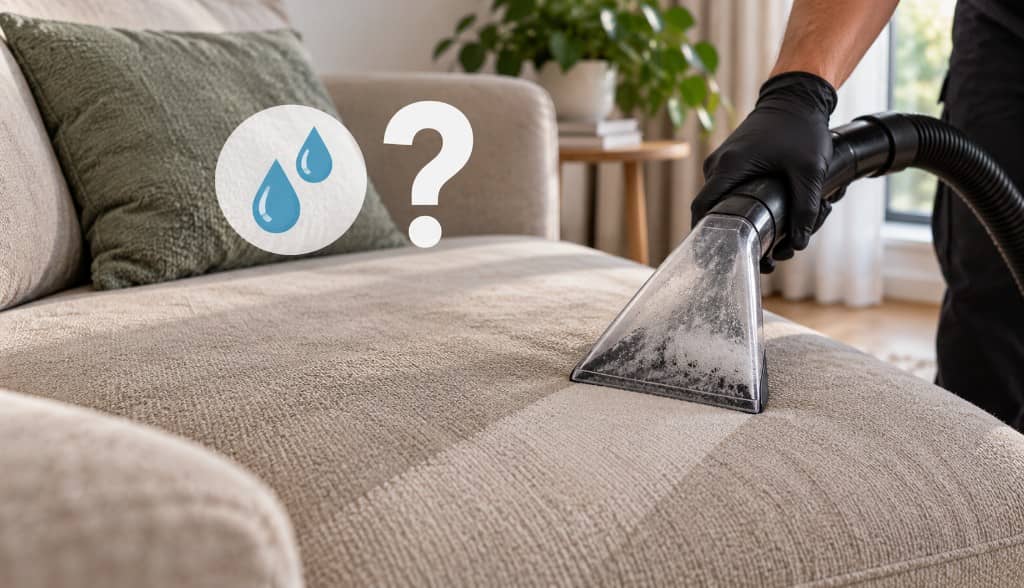
Different upholstery fabrics respond differently to water, chemicals, heat and mechanical action. Professional upholstery cleaning therefore begins with assessing the material and its condition, while cleaning agents may be tested before being applied more broadly. See also: Can you clean this fabric with water?.
What can go wrong?
- Too much water can extend drying time
- An unsuitable cleaning product may affect the appearance or colour of the fabric
- Aggressive scrubbing can alter or damage the texture of the fibres
- The longer a stain remains untreated, the harder it may become to remove
FabricLink recommends treating spills promptly, testing the cleaning method in an inconspicuous area, avoiding over-wetting and not rubbing aggressively.
What to do instead of incorrect cleaning
When something spills:
- blot the liquid first
- do not push it deeper into the fabric
- avoid mixing several cleaning products
- do not use aggressive chemicals unless you know how the upholstery will react
Practical guide: how to clean a sofa.
2. Dust, Pet Hair and Dirt That Builds Up Over Time
A sofa can look clean while gradually becoming heavily soiled.
Dust settles on it every day. We sit down wearing clothes from outside. We eat on the sofa. Pets leave hair behind. Crumbs and skin particles can become trapped in the fabric.
Over time, all of this adds up.
The IICRC standard for professional upholstery cleaning specifically recommends removing dry particulate soil — such as hair, lint, dust and debris — as thoroughly as practical before applying cleaning agents or moisture.
That makes regular vacuuming an important part of sofa care.
But vacuuming is not the same as deep cleaning.
When a sofa has been heavily used for years, some dirt may remain trapped deeper within the upholstery.
You may eventually notice:
- grey or dull-looking fabric
- darker areas on the seat cushions
- hair that is difficult to remove
- a less-fresh appearance
- visible differences between heavily and lightly used areas
In homes with dogs or cats, this buildup can happen even faster.
That is why you should clean not only the floor around the sofa but the upholstery itself. Tip: what pets leave behind at home.
3. Sunlight, Moisture and Constant Everyday Use
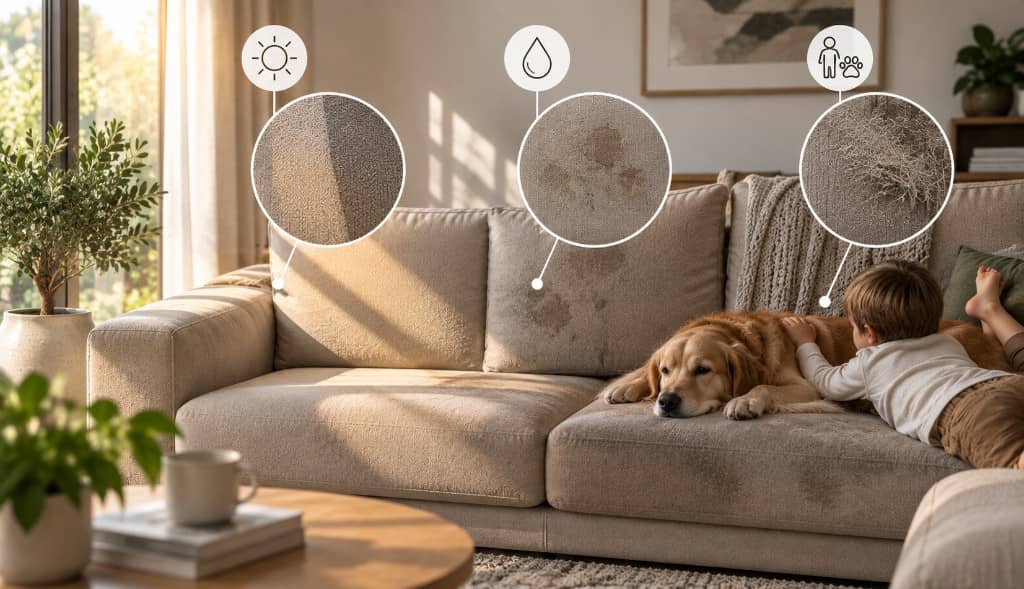
A sofa does not need a coffee stain to gradually lose its original appearance.
Textiles are constantly exposed to their surroundings.
One important factor is long-term direct sunlight.
UV exposure can contribute to gradual fading and changes in textile appearance. This is why manufacturers of performance fabrics pay particular attention to UV resistance.
That does not mean a sofa will suddenly fade after a few sunny weeks.
But if one section of upholstery receives strong direct sunlight for years, it can eventually look different from areas that receive less exposure.
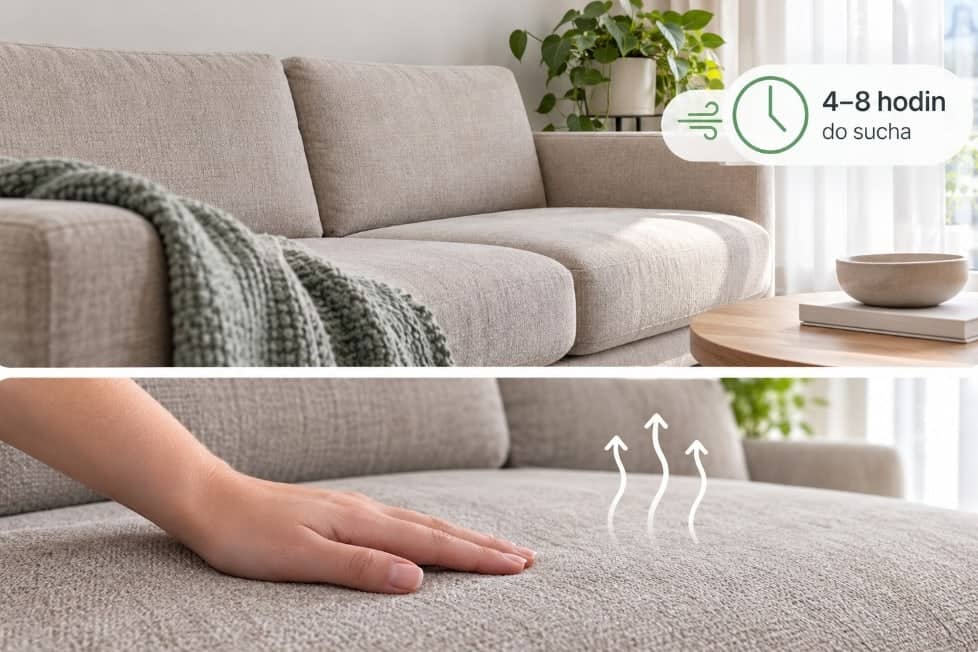
Moisture matters too. When upholstery is cleaned, more water is not necessarily better.
A proper professional process is about applying an appropriate amount of cleaning solution and removing excess moisture effectively. More on drying: how long a sofa takes to dry.
The goal is not to simply soak the sofa.
And then there is everyday mechanical wear. The areas that usually experience the most use include:
- seat cushions
- armrests
- front edges of cushions
- backrests
- areas where children or pets spend the most time
These are often the first places where changes become noticeable.
What Damages a Sofa the Most?
In simple terms:
- Incorrect cleaning — the wrong product, too much water or aggressive scrubbing can cause more problems than the original stain
- Dirt that is allowed to build up — dust, hair, crumbs and other particles gradually become trapped in the upholstery
- Long-term environmental and everyday stress — sunlight, moisture and constant friction gradually affect the appearance of the fabric
How Can You Help Your Sofa Last Longer?
You do not need to wait for a major cleaning session.
- Vacuum the upholstery regularly — use a suitable attachment on cushions, armrests and hard-to-reach areas
- Treat spills quickly — blot fresh spills rather than aggressively rubbing them in
- Be careful with DIY cleaning hacks — vinegar, baking soda, alcohol and strong degreasers are not suitable for every material
- Protect the sofa from prolonged direct sunlight — curtains, blinds or thoughtful placement help
- Watch the condition of the fabric — you do not have to wait until it looks obviously dirty
How Often Should a Sofa Be Professionally Cleaned?
There is no universal schedule.
The appropriate frequency depends on:
- how heavily the sofa is used
- the number of people in the household
- children
- pets
- the upholstery material
- dust levels
- staining
- smoking indoors
- and the general condition of the sofa
A sofa in a home with children and a dog will naturally require more care than one that is rarely used.
So the best guide is the condition of the sofa rather than a fixed calendar interval.
What If Your Sofa No Longer Looks Like It Used To?
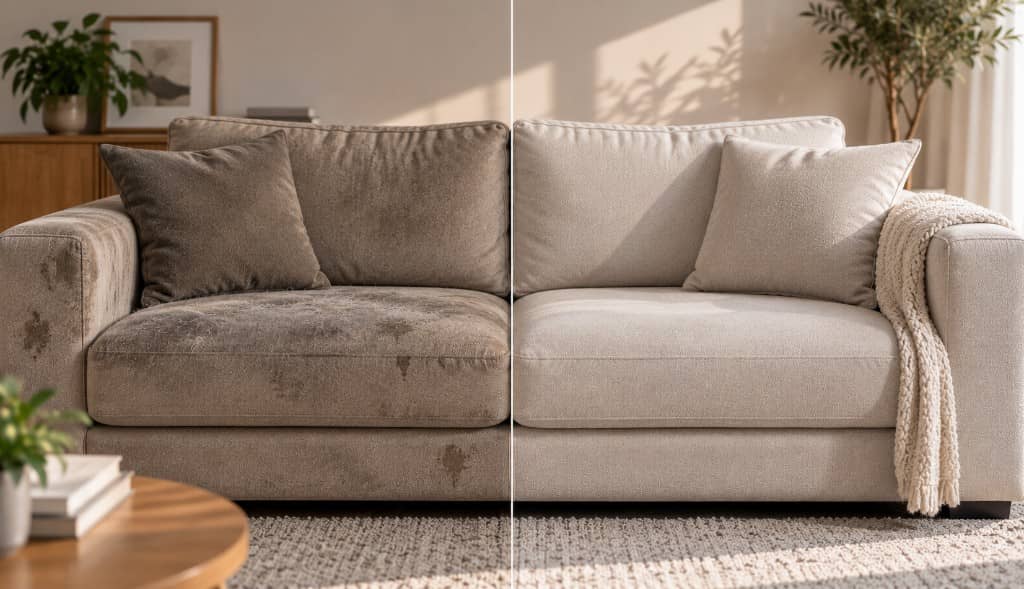
That does not necessarily mean it needs replacing.
Dull fabric, stains, embedded hair or heavily used seats may sometimes be significantly improved through professional cleaning, depending on the material and its condition.
It is important to have realistic expectations, though.
Professional cleaning is not magic, and not every old stain can be removed completely.
The result depends on the type of stain, how old it is, the fabric and any previous cleaning attempts.
That is why professional upholstery standards emphasise pre-inspection, method selection and identifying limitations before cleaning begins.
When Should You Call a Professional?
Professional cleaning may be a good option when:
- the sofa looks visibly dull
- there are older stains
- the upholstery is heavily soiled
- pet hair is deeply embedded
- there is a persistent odour
- you do not know what type of material you have
- or you are worried about damaging the upholstery yourself
The answer is not necessarily to find the strongest cleaning product.
The key is choosing the right method. Compare approaches in professional vs DIY cleaning.
You May Not Need a New Sofa — You May Need Better Care

Regular vacuuming, quick stain treatment, appropriate maintenance and occasional deep cleaning can help keep upholstery looking better for longer.
And when you are unsure what your fabric can safely tolerate, do not experiment on the most visible part of the sofa first.
Cleanárna provides professional sofa, armchair, carpet, mattress and upholstery cleaning in Prague and the surrounding area.
We use professional extraction equipment and adapt the cleaning process to the specific material and its condition.
Not sure whether your sofa can be cleaned?
Send us a photo of the upholstery. We can recommend a suitable approach and give you an estimated price. Order.
A cleaner home. A better everyday.
Sources & research
Dust mite facts in this article come from peer-reviewed studies and health organisations — not clickbait claims like “millions of mites in one mattress”.
Frequently asked questions
What damages a sofa the most?
Incorrect cleaning, dirt that builds up over time (dust, hair, crumbs), and long-term stress from sunlight, moisture and everyday use.
How should I treat a sofa stain?
Blot first, do not push the spill deeper, avoid mixing products, and test on a hidden area. Do not over-wet or scrub aggressively.
Is vacuuming the sofa enough?
Regular vacuuming is essential, and IICRC recommends removing dry soil before wet cleaning. But vacuuming is not the same as deep cleaning for long-term soiling.
How often should a sofa be professionally cleaned?
There is no universal interval. It depends on use, children, pets, material, dust and stains. Follow the sofa’s condition, not only a calendar.
When should I call professionals?
When the sofa looks dull, is heavily soiled, has older stains, embedded hair, odour, an unknown fabric type, or you risk damaging it with DIY cleaning.
Ready for professional cleaning?
Calculate your price online — no obligation, instant estimate.
Get instant price