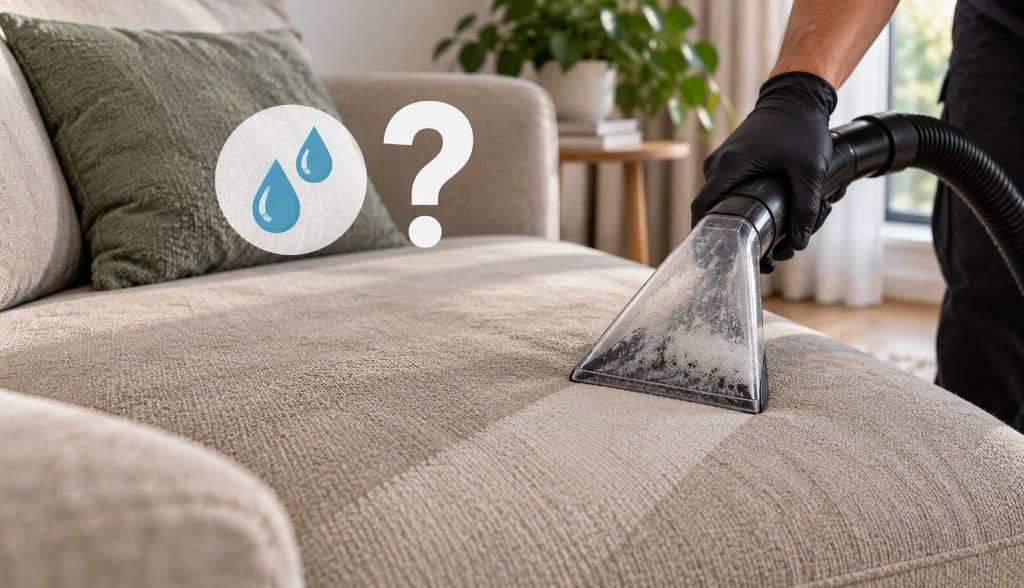
Not every sofa can be cleaned the same way
Not every sofa can handle the same cleaning method. It depends on the material, construction and the manufacturer's instructions.
You may have stood in front of a sofa with a cleaning product in your hand and wondered:
“Can I use water on this fabric — or will I damage it?”
At first glance, it is not always obvious. Two sofas can look almost identical, yet their upholstery may need completely different care.
This is where the most common DIY mistake starts: water is used before anyone checks what cleaning method that specific fabric can actually tolerate.
Professional upholstery cleaning therefore does not begin with cleaning itself, but with inspecting the material, its construction, condition and the appropriate method. That assessment is also covered by the international ANSI/IICRC S300 standard for professional upholstery cleaning.
Water itself is not the problem
Water itself is not the problem. Incorrect use of water is.
People often hold two opposite beliefs.
One says: “Water cannot hurt fabric.”
The other: “Upholstery must never be cleaned with water.”
Neither is true as a universal rule.
Some textiles are designed for water-based cleaning, and some performance fabrics can even be cleaned regularly by extraction. Certain high-performance upholstery materials are manufacturer-approved for water cleaning and hot-water extraction.
On the other hand, some materials and constructions can change appearance, take too long to dry, develop watermarks or suffer other damage if too much water or the wrong process is used.
So the better question is not only: “Can I use water?”
It is: “Which cleaning method is suitable for this specific material?”
How do you know whether upholstery can be cleaned with water?
Before using water or a cleaning product, check the material. A practical walkthrough is also in how to clean a sofa.
1. Start with the manufacturer's label
First check whether the sofa or chair has a care label.
Upholstered furniture often includes cleaning-method guidance that shows which products and processes the manufacturer recommends.
Different materials may list water-based or solvent-based cleaning. Follow the manufacturer's instructions — not only how the fabric looks. Care guidance exists specifically to help you choose the right maintenance method.
A missing label does not automatically mean cleaning is impossible.
In that case, the material needs to be assessed another way.
2. Fabric type matters more than colour or appearance
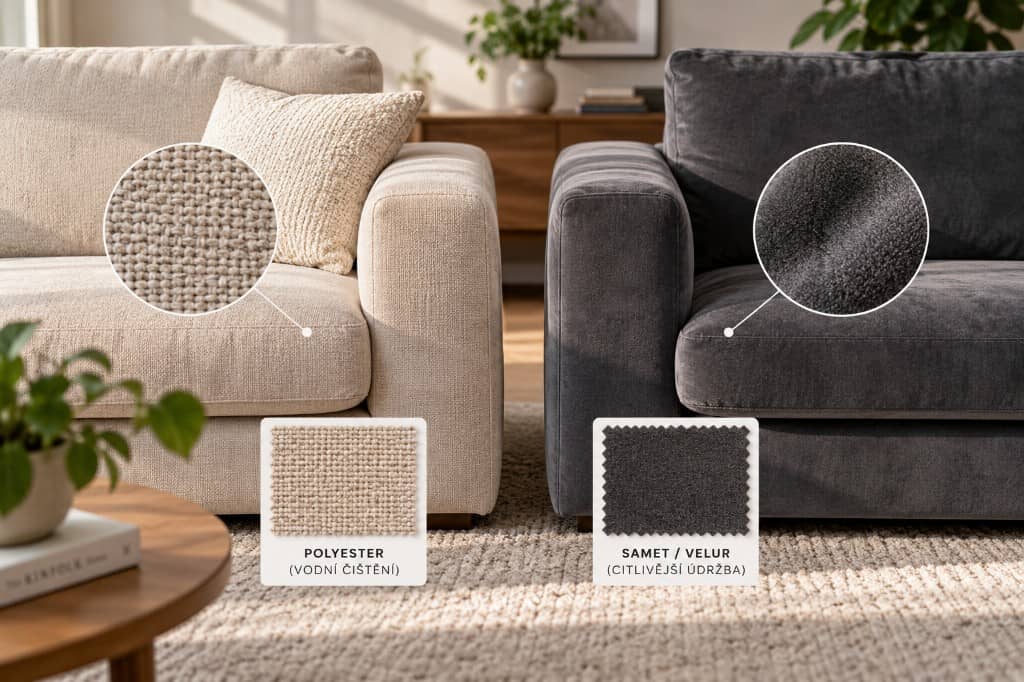
A light beige sofa and a dark grey sofa may be made from completely different fibres.
Similar-looking upholstery can also have a different construction or surface finish.
Professional cleaning therefore considers factors such as:
- fibre type
- fabric construction
- surface finish
- colourfastness
- level of soiling
- overall condition of the upholstery
Identifying fibres, construction and upholstery style is among the core areas of professional cleaning under ANSI/IICRC S300.
3. Colourfastness matters too
One reason not to experiment with water and cleaners on a highly visible part of the sofa is possible dye release.
Professional cleaning therefore includes material checks and, where needed, a test in a less visible area.
That can reveal a problem before you clean the whole piece.
There is little worse than finishing a clean and discovering dye transfer or visible changes in the fabric.
What can go wrong with overly wet cleaning?
More water is not automatically better cleaning.
One of the most common DIY mistakes is simply soaking the fabric so dirt “comes out more easily”.
With upholstery, controlling moisture and proper extraction afterwards are essential.
The wrong process can lead to:
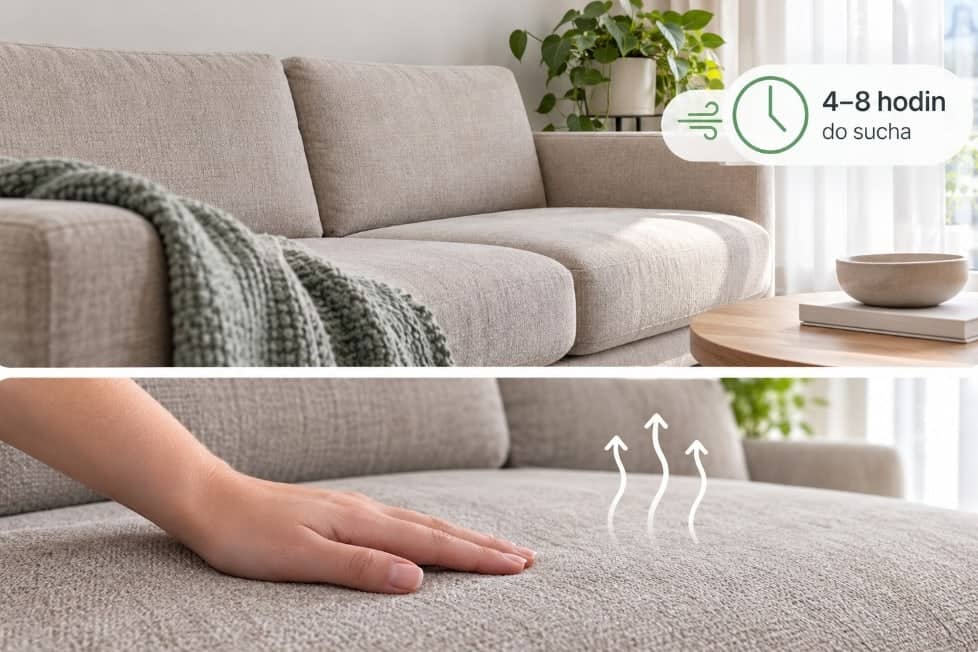
- Long drying times — the material stays wet and is not ready for normal use
- Watermarks or appearance changes — some fabrics look different after drying
- Dye transfer — sensitive textiles may release colour
- Unnecessary wetting of the structure — moisture can reach more than just the outer fabric
Professional cleaning is not about using as much water as possible — it is about using the right amount in the right way. More on drying in how long a sofa takes to dry.
What about extraction cleaning?
Extraction cleaning is a professional method where a cleaning solution is applied to the textile and then extracted together with loosened soil.
It is a standard part of professional upholstery care and is included among professional cleaning systems in ANSI/IICRC S300.
One important point:
The existence of extraction cleaning does not mean it is suitable for every fabric.
First you need to know whether that material allows this method.
For example, Crypton states that some of its performance upholstery materials can be cleaned regularly with hot-water extraction.
That is a good reminder to start from the specific material — not a general rule.
What if you do not know the fabric type?
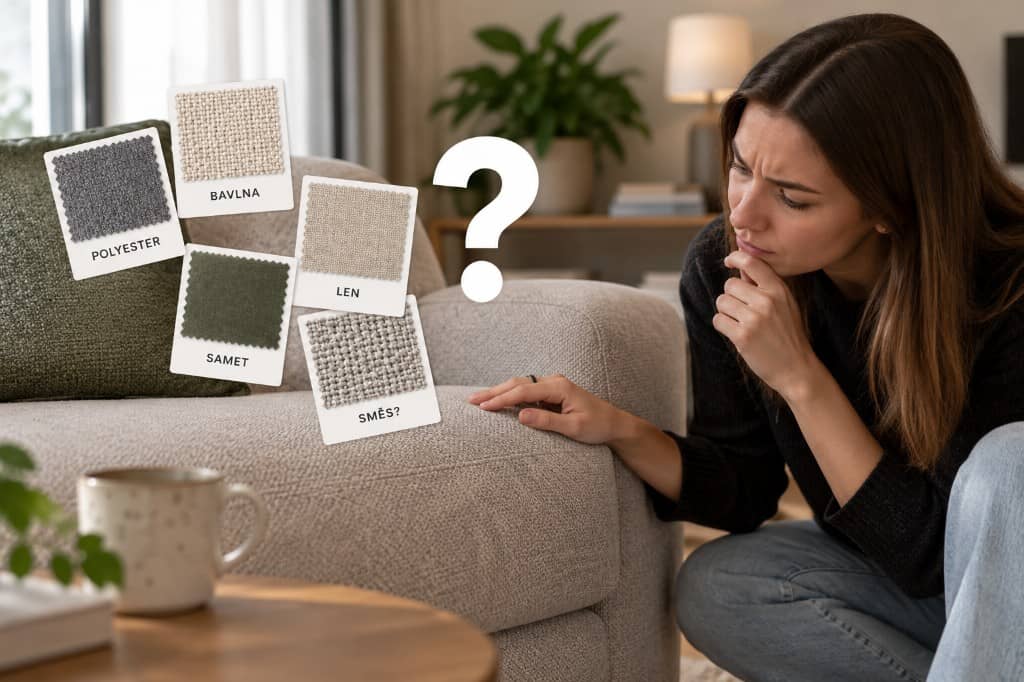
This is very common.
You do not need to know exactly whether you have polyester, polypropylene, a blend or another fibre.
And you certainly should not guess.
You can start by:
- finding the care label
- checking documentation or manufacturer information
- looking for a specified cleaning method
- avoiding aggressive products on a visible area if you are still unsure
On an expensive sofa, one bad experiment can cost far more than a professional assessment.
Can you clean a sofa with water at home?
Sometimes yes — but only once you know water-based cleaning is suitable for that material.
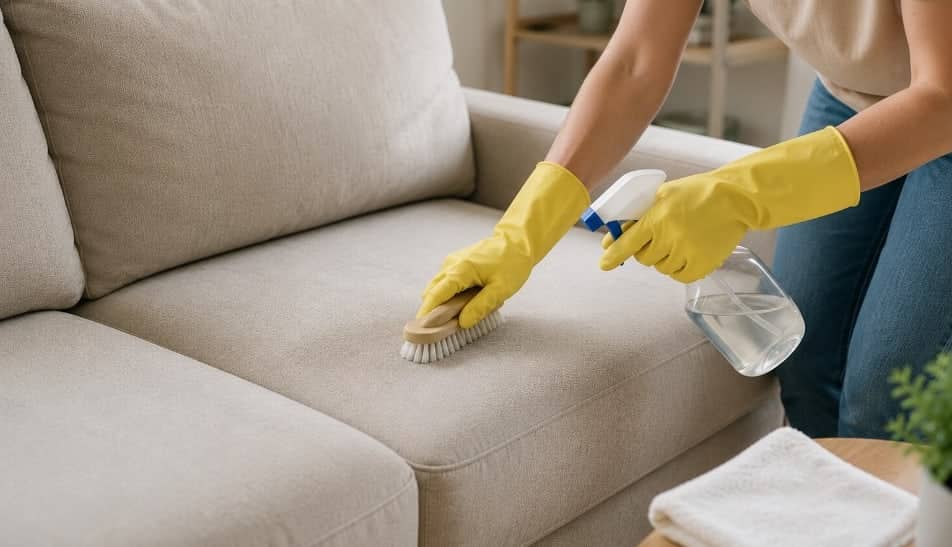
For some textiles, home spot cleaning can be fine. For a small fresh spill, a manufacturer may recommend a mild solution and then removing excess moisture.
Even then, a few basic rules apply.
- Do not over-wet
- Do not start with an aggressive product
- Test a less visible area first
- Do not clean blindly without knowing the material
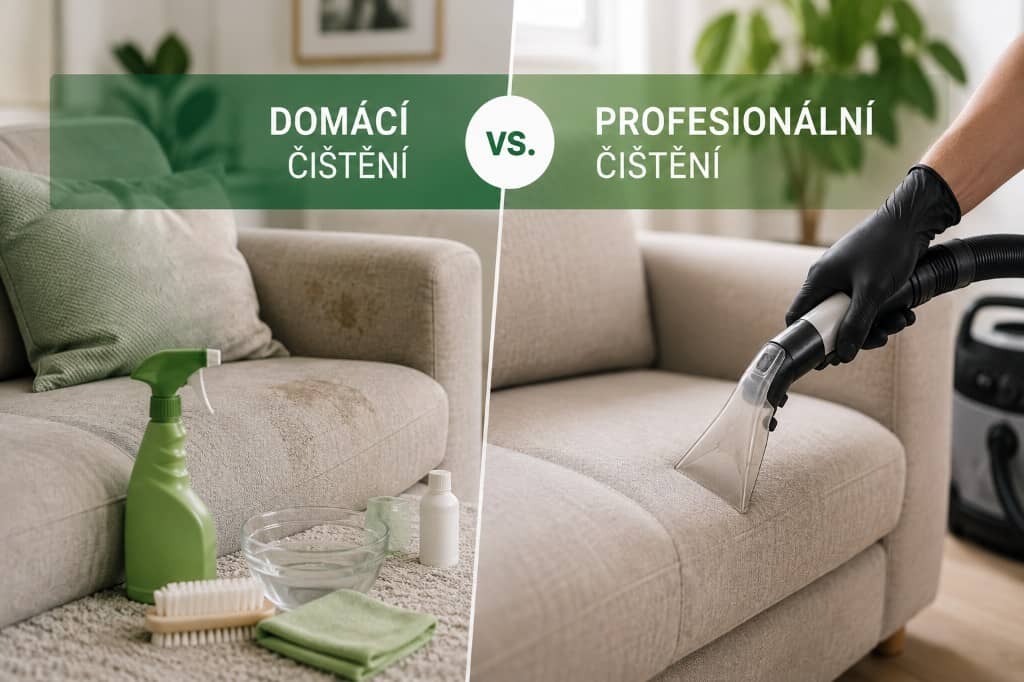
Where manufacturers allow water cleaning for a specific fabric, they often stress limited solution volume, thorough extraction of excess moisture and proper drying. Compare approaches in professional vs DIY cleaning.
When is it better to leave cleaning to professionals?
Professional cleaning makes the most sense when:
- the sofa is heavily soiled
- there are old or widespread stains
- you do not know the upholstery type
- the material is sensitive or expensive
- you are worried about dye bleeding
- you need to clean a larger area
- the sofa has not been thoroughly cleaned for a long time
Professional cleaning should not start with “How much water will we use?”
It should start with: “What is this material, and which method is safe for it?”
That is why IICRC S300 includes pre-inspection, material identification, method selection and post-cleaning checks.
How we do it at Cleanárna
Our goal in professional upholstery cleaning is not simply to “wet the sofa and vacuum it”.
First we assess the material type, its condition and the level of soiling.
Only then do we choose the chemistry, solution volume, application method and extraction.
That matters for the final look — and for keeping the process as gentle on the material as possible.
We use professional extraction equipment and professional cleaning products, and we adapt the process to the specific upholstery. Upholstery cleaning in Prague.
The most common mistake? Cleaning every sofa the same way
What works on one polyester upholstery may be the wrong approach for another fabric.
That is why there is no simple answer: “Yes, you can clean every sofa with water.”
The opposite answer is just as wrong: “No, sofas must never be cleaned with water.”
The right answer is: It depends on the specific material, its construction, the manufacturer's instructions and the method you choose.
Not sure about your sofa?
You do not need to guess the fabric type by touch or from a photo online.
Send us a photo of the sofa or its upholstery.
We can look at the material and surface condition and recommend the next step. In professional cleaning, the most important thing is not to start with water — but with a proper material assessment.
Cleanárna — professional cleaning of sofas, carpets, mattresses and upholstery in Prague and the surrounding area.
A cleaner home. A better everyday.
Sources & research
Dust mite facts in this article come from peer-reviewed studies and health organisations — not clickbait claims like “millions of mites in one mattress”.
Frequently asked questions
Can I clean my sofa with water?
It depends on the material. Some textiles tolerate water-based cleaning; others do not. Check the care label or have the fabric assessed — water itself is not the problem, incorrect use is.
How do I know if upholstery can be cleaned with water?
Start with the care label. Fibre type, construction, colourfastness and condition matter more than colour or how the fabric looks.
What happens if cleaning is too wet?
You may get long drying times, watermarks, dye transfer or unnecessary wetting of the furniture structure. Moisture control and thorough extraction are essential.
Is extraction cleaning suitable for every sofa?
No. Extraction is a common professional method, but you first need to confirm whether the specific material allows it.
When should I call professionals?
For heavy soiling, old stains, unknown or sensitive fabric, dye-bleed concerns, larger areas, or when the sofa has not been thoroughly cleaned for a long time.
Ready for professional cleaning?
Calculate your price online — no obligation, instant estimate.
Get instant price